OEM sales cycles are long, complex, and expensive. Digital twin visualization is changing that. Here is how leading manufacturers are closing deals faster
Introduction
The average B2B sales cycle for capital equipment and industrial products runs anywhere from three to eighteen months. Multiple stakeholders, complex technical evaluations, budget approvals, and competitive comparisons — every stage takes time, and every stage is an opportunity for a deal to stall.
For most OEMs, the sales process has not changed significantly in decades. A sales rep meets a buyer, hands over a brochure, maybe books a facility visit, and waits. The product is complex. Explaining it takes time. Getting all the right people in the room at the same time is almost impossible.
Digital twin visualization is changing this — not by replacing the sales team, but by making every part of the sales process faster, clearer, and more scalable.
What Is Digital Twin Visualization
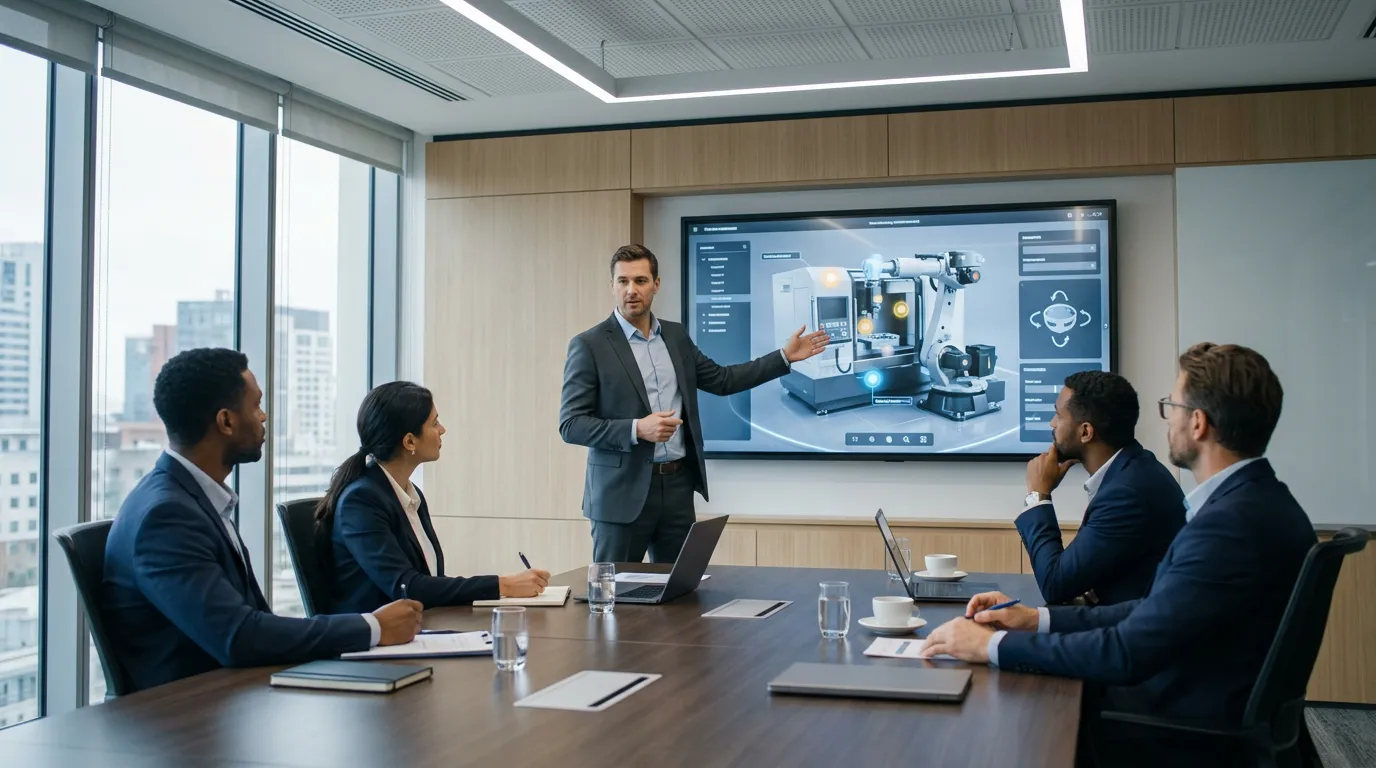
A digital twin is an interactive, web-ready replica of a physical product — built from existing 3D engineering files such as CAD, STEP, or FBX formats. Unlike a static image or a pre-rendered video, a digital twin experience allows a buyer to rotate the product, zoom into components, trigger animations showing how it operates, view dimensions and specifications overlaid on the model, and explore it in AR on a phone or in VR with a headset.
It runs in a browser. No software installation. No specialist hardware. No engineer required in the room. Any stakeholder, anywhere in the world, can access it through a shared link — at any time during the evaluation process.
"The product demonstration used to end when the sales rep left the room. With digital twin visualization, it continues through every stage of the buying process — with every stakeholder, on their schedule."
The Core Sales Problem Digital Twins Solve
OEM products are complex. That complexity is usually the point — it is where the engineering value lives. But complexity creates a communication problem in sales. The people who understand the product most deeply are engineers. The people who need to be convinced to buy it are often operations managers, finance directors, and board-level approvers who think in outcomes, not specifications.
Bridging that gap has traditionally required expensive in-person demonstrations, thick technical documentation, and a senior engineer on every sales call. Digital twin visualization makes the product self-explanatory — allowing any buyer, at any level of technical knowledge, to understand what the product does and why it matters without needing an expert translator.
Five Ways Digital Twins Shorten the OEM Sales Cycle
1. Demos that travel without your sales team Once a digital twin experience is built, your sales team shares it via a link after every call. The buyer explores independently, revisits the experience multiple times, and shares it with colleagues — extending the reach of your demonstration without any additional effort from your team.
2. Multi-stakeholder alignment In most capital equipment purchases, four to six people are involved in the final decision. Your sales rep typically presents to one. A digital twin link can be shared across the entire buying committee simultaneously — giving every decision-maker the same quality product explanation without requiring multiple presentations.
3. Distributor and dealer enablement Your distribution network sells your product to end customers without your engineering team present. A digital twin gives every distributor a tool they can use independently to demonstrate the product accurately — regardless of their technical depth or experience with your product line.
4. Trade show presence without shipping costs Transporting heavy industrial equipment to trade shows is expensive, logistically complex, and physically risky. A digital twin experience delivers a full interactive product demonstration on a screen or VR headset — at a fraction of the cost, with zero logistics overhead.
5. Post-demo buyer engagement After a live demonstration, most buyers are left with whatever notes they took and a brochure. A digital twin link keeps the product present throughout the evaluation period — buyers return to it, share it internally, and use it to make the case for purchase to stakeholders who were not in the original meeting.
What OEMs Need to Get Started
The most common misconception about digital twin visualization is that it requires new 3D models to be built from scratch. It does not. If your engineering team has CAD files — and every modern OEM does — the foundation already exists.
The process starts with your existing 3D files. A digital twin studio takes those files, optimizes them for web delivery, adds interactive layers and animations, and builds the experience in a format accessible on any device. The result is a shareable link your team can use from day one.
What you need to provide:
Existing 3D files in CAD, STEP, FBX, OBJ, or similar formats
Clarity on what the experience needs to explain — key features, operational sequences, differentiators
An understanding of who the experience is for — buyers, distributors, training participants, or all three
The Measurable Impact
OEMs that have integrated digital twin visualization into their sales process report shorter evaluation periods, higher engagement from remote and international buyers, reduced dependency on senior engineers for every sales conversation, and more consistent product demonstrations across their entire distribution network.
The experience also generates buyer engagement data — which sections buyers spend time on, which animations they replay, which components they explore repeatedly. This data helps sales teams prioritize follow-ups, tailor next conversations, and understand where interest is strongest before they pick up the phone.
The Shift That Is Already Happening
Digital twin visualization is not a future technology. OEMs across medical devices, industrial automation, precision manufacturing, and capital equipment are already using it to demonstrate products that cannot be physically shipped to every buyer, train distribution networks that span multiple countries, and accelerate buying decisions that previously stalled at the multi-stakeholder alignment stage.
The companies that build this capability now are establishing a sales and marketing advantage that will be significantly harder to close in three years. The 3D models already exist in your engineering department. The question is whether they are working as hard as they could be.
Frequently Asked Questions
What Is the Difference Between a Digital Twin and a 3D Model?
A 3D model is an engineering file — built for design and manufacturing purposes. A digital twin visualization is built from that same file but optimized for communication — interactive, web-ready, and accessible to any stakeholder through a shared link without specialist software.
How Long Does It Take to Build a Digital Twin Experience?
Most digital twin experiences are built in four to eight weeks depending on model complexity and the number of interactive features required. The starting point is always your existing CAD or STEP files — no new 3D modelling is needed from scratch.
Can Digital Twin Visualization Work for Any Type of OEM Product?
Yes. Digital twin visualization works for any product that exists as a 3D engineering file — from medical devices and industrial automation systems to capital equipment and precision manufacturing lines. If the CAD file exists, the experience can be built.