You already have good options for marketing your product. Here is why 3D animation goes further than all of them.
Introduction
Your product took years to engineer. It has mechanisms, sequences, and capabilities that your competitors cannot match. And when it comes to explaining all of that to a buyer, you hand them a brochure.
Most manufacturers are sitting on one of the most powerful marketing assets available to them — detailed 3D CAD files of every product they make — and doing nothing with them. Meanwhile their sales team is trying to explain a half-million dollar machine using photographs and PowerPoint slides.
That gap is exactly what 3D animation closes.
What You Already Have Available
Before making the case for 3D animation, it is worth being honest about the options already on the table.
Your phone. Fast, free, always available. Works for social media updates, behind the scenes content, and quick product clips. But a machine that costs half a million dollars filmed on a phone sends the wrong signal about its value.
Professional photography. A skilled product photographer makes any machine look impressive. Essential for brochures, websites, and print collateral. But photography shows surfaces. It cannot show what happens inside the machine, how it operates, or what makes it technically superior to a competitor that looks similar from the outside.
Live video production. A professional crew on the factory floor captures the machine running. Compelling content for brand films and trade show reels. But it is expensive, logistically heavy, and has a short shelf life. When the product changes, the footage is outdated. When the machine is unavailable, production stops.
Your CAD files. Sitting in your engineering department are detailed, precise 3D models of every product you make. Most marketing teams never touch them. This is the biggest missed opportunity in manufacturing marketing today.
What 3D Animation Does That Nothing Else Can
This is where the conversation changes.
Every option above has a ceiling. A phone has a ceiling. A camera crew has a ceiling. Professional photography has a ceiling. 3D animation built from your CAD files does not hit those ceilings — because it is not constrained by what a lens can physically capture.
With 3D animation you can open the machine and show exactly what is happening inside. You can walk a buyer through an assembly sequence component by component. You can show material moving through a processing line at the precise speed and path your engineers designed. You can demonstrate a safety mechanism activating in slow motion. You can place two product variants side by side and show exactly what changed between them.
No camera can do this. No photographer can do this. No amount of budget spent on a live shoot produces this. And every single one of these things is directly relevant to why a buyer chooses your product over a competitor.
"The value of a complex industrial product lives inside it. 3D animation is the only medium that can take a buyer inside — without the machine, without a shoot, and without an engineer in the room."
The Four Places 3D Animation Changes the Sales Outcome
In the sales meeting. Your rep walks any buyer through exactly how the product works. No machine required. No engineer on the call. No asking the buyer to imagine something from a diagram. The animation does the explaining.
In the distributor network. Your dealers sell your product to end customers without your team present. A 3D animation gives every distributor the same quality demonstration capability regardless of their technical knowledge. Your product gets explained correctly every time.
At the trade show. Shipping heavy industrial equipment to exhibitions is expensive and risky. A 3D animation running on a screen delivers a complete interactive product story. It draws attention, communicates complexity, and gives visitors something to engage with before a conversation starts.
After the meeting ends. Most buyers leave a demonstration with a brochure and fading memory. A 3D animation link travels with them. They watch it again. They share it with colleagues. They use it to build the internal case for purchase with stakeholders who were never in the room.
The Starting Point Is Already in Your Engineering Department
Here is what makes 3D animation uniquely practical for manufacturers. The hard work is already done.
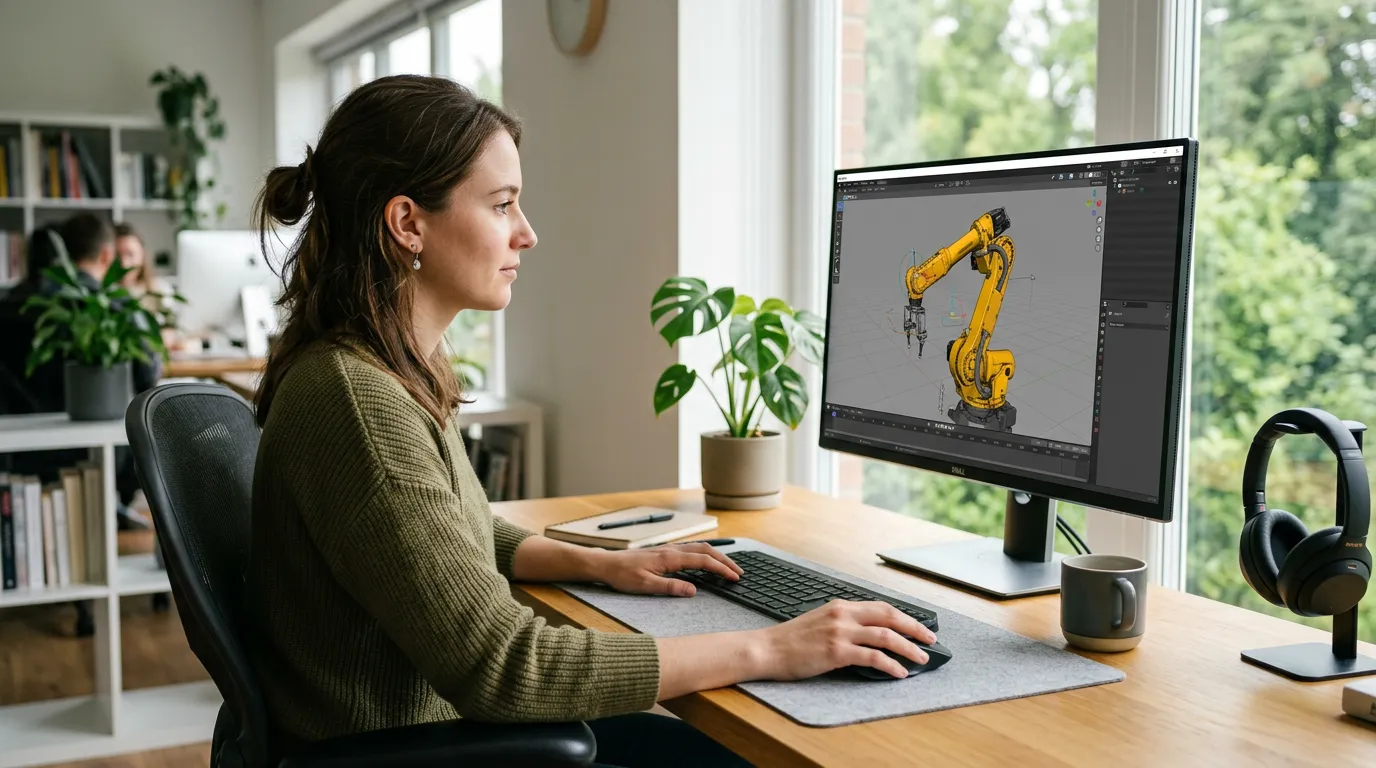
Your CAD files are the foundation. A 3D animation studio takes those files, optimizes them for visual output, builds the scene, adds lighting and camera movement, and renders the final animation. You do not need a shoot. You do not need the machine available. You do not need a production crew on site.
When the product changes, the file is updated and the animation is re-rendered. No reshoot. No new crew. No starting from scratch. Over a product lifecycle of three to five years, the per-use cost of a well-produced 3D animation is a fraction of any other content format.
What you need to provide:
Existing 3D files in CAD, STEP, FBX or OBJ format
Clarity on what the animation needs to explain
An understanding of where it will be used
Your Product Deserves Better Than a Brochure
You spent years building something technically impressive. Your buyers are making six and seven figure decisions. The gap between those two facts is a communication problem — and communication problems have solutions.
3D animation is not a creative luxury for manufacturers with big budgets. It is the most direct path from the engineering value locked inside your product to the buyer sitting across the table who needs to understand it.
Your CAD files are ready. The question is what you are going to do with them.
Frequently Asked Questions
Do I Need to Replace My Existing Marketing Content With 3D Animation? No. Phone content, photography, and live video all have their place. 3D animation fills the specific gap none of them can fill — explaining how a complex product works to a buyer who cannot see it in person. It works alongside your existing content, not instead of it.
How Much Does 3D Product Animation Cost Compared to a Professional Video Shoot? Initial costs are often comparable. The difference is what happens after delivery. A video shoot produces footage that goes out of date when the product changes. A 3D animation built from CAD files can be updated at a fraction of the original cost, making it significantly more cost-effective across a product's lifetime.
Can 3D Animation Be Built From Our Existing CAD Files? Yes, and this is exactly where it delivers the most value for manufacturers. Your existing CAD or STEP files are the starting point. No new 3D modelling is required from scratch, which reduces both cost and production time significantly.