Text manuals and classroom sessions have been the default for decades. Here is why manufacturers are replacing them with 3D animation.
Introduction
Every manufacturer has a training problem. New technicians take too long to become productive. Experienced engineers spend too much time answering questions that training was supposed to answer. And the text manuals that document how everything works sit on shelves, unread.
The problem is not that employees do not want to learn. The problem is that text manuals and classroom sessions are genuinely poor formats for teaching people how to operate complex physical equipment.
3D animation changes this. Not as a novelty, but as a fundamentally more effective way to train people on products that are complex, physical, and operational.
Why Text Manuals Fail for Complex Equipment Training
A text manual describes what to do. It does not show it. For any task involving physical movement, equipment operation, or visual judgment, reading a description of the correct action is a poor substitute for seeing it performed.
The retention gap is significant. Research on learning consistently shows that people retain approximately 10 percent of what they read and over 60 percent of what they see and hear combined. For manufacturers training technicians on complex assembly sequences, safety procedures, and operational workflows, that gap translates directly into errors, accidents, and extended onboarding periods.
Text manuals also create inconsistency. When a senior engineer trains a new employee in person, the quality of that session depends on the trainer's communication skill, available time, and patience on that particular day. 3D animation delivers the same explanation, the same demonstration, and the same quality to every employee every time.
What 3D Animation Makes Possible for Training
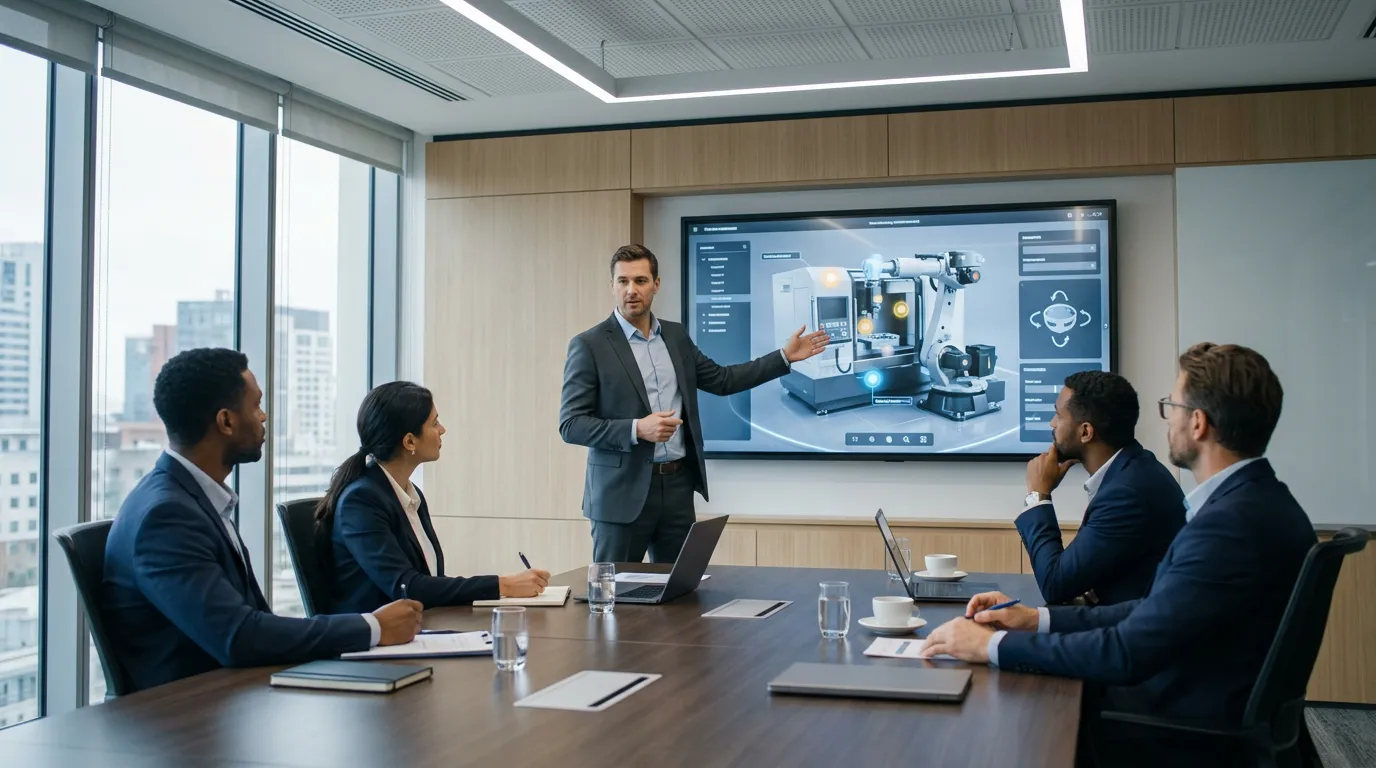
With 3D animation built from existing engineering files, manufacturers can show trainees things that no classroom session or live demonstration can match.
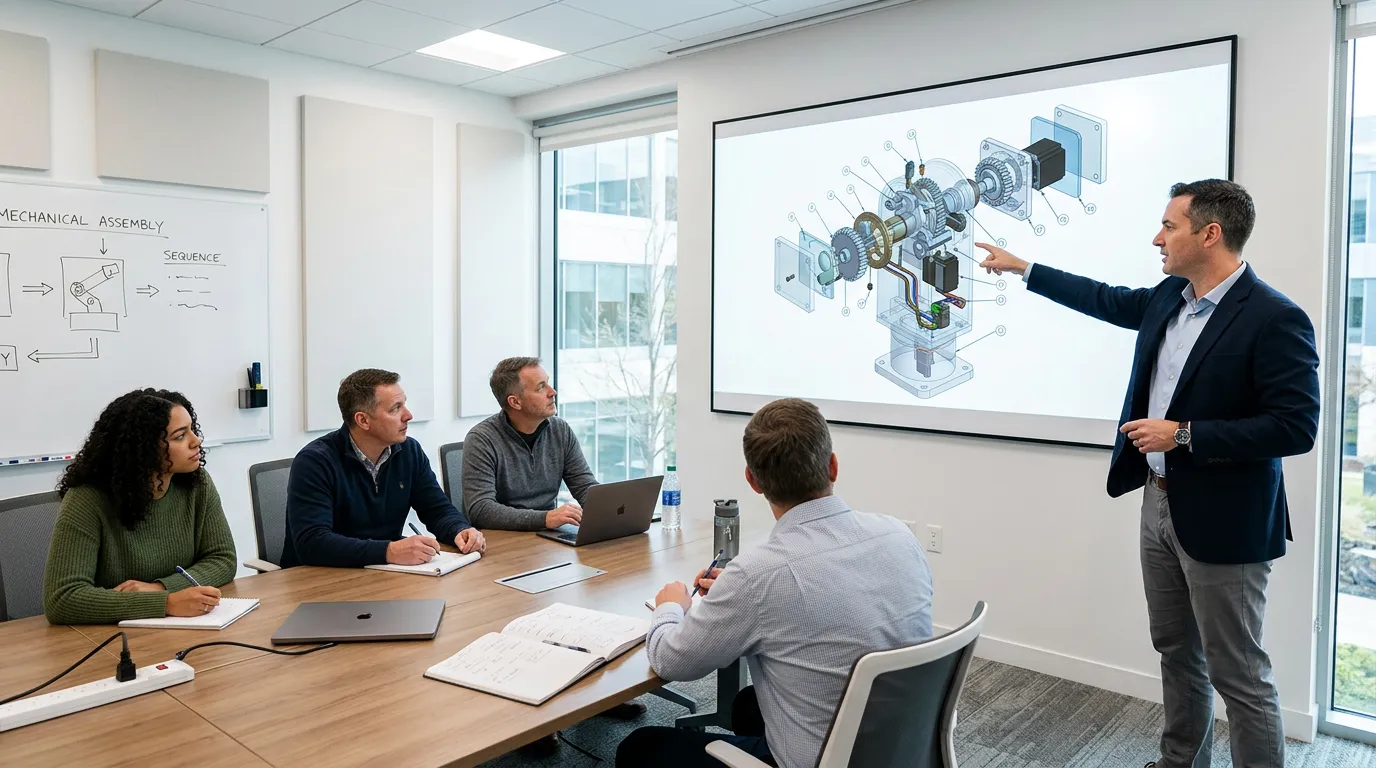
You can open the machine and show exactly what is happening inside during operation. You can walk a technician through an assembly sequence component by component at whatever speed the learner needs. You can demonstrate a safety procedure in a controlled environment with no risk to the trainee or the equipment. You can show what a fault looks like before it becomes a breakdown, and exactly how to respond when it does.
This is training content that a manual cannot deliver and a live demonstration cannot safely replicate. It is also content that is available on demand, repeatable without cost, and accessible to every new employee from day one.
"3D animation does not replace the expertise of your senior engineers. It captures that expertise once and makes it available to every employee, on every shift, in every location."
The Four Training Scenarios Where 3D Animation Delivers Most
New employee onboarding. New technicians can watch assembly sequences, operational procedures, and safety training before they touch the physical equipment. They arrive at the machine already familiar with how it works, which reduces supervised training time and the risk of early errors.
Safety training. Demonstrating dangerous procedures on live equipment carries obvious risk. 3D animation shows exactly what happens during a safety incident and how to respond correctly, in a controlled environment with no physical risk.
Multi-location training. Manufacturers with facilities in multiple locations face the challenge of delivering consistent training without flying trainers around. A 3D animation library delivers the same standard of training to every location simultaneously.
Product updates and new model training. When a product line changes, retraining existing technicians is a significant logistical challenge. A 3D animation can be updated to reflect the change and distributed instantly, without scheduling sessions or printing new manuals.
The Starting Point Is Already in Your Engineering Files
The most practical aspect of 3D animation for manufacturers is that the foundation already exists. Your CAD files contain everything needed to build accurate, detailed training animations of every product you make.
A 3D animation studio takes those files, builds the training sequences, adds voiceover and on-screen labels, and delivers a library of training content that your team can use immediately and update as products evolve.
What you need to provide:
Existing 3D files in CAD, STEP, FBX or OBJ format
A list of the training scenarios you need to cover
Input from your senior engineers on the procedures that matter most
The Knowledge Your Senior Engineers Carry Does Not Have to Leave With Them
Every manufacturer has employees whose knowledge is irreplaceable. When they leave, retire, or are unavailable, that knowledge goes with them and the training gap becomes a production problem.
3D animation captures that knowledge in a format that does not depend on any individual being in the room. It is training content that scales, travels, and stays consistent regardless of who is on shift, which location is running, or how many new employees start next month.
Your CAD files are ready. The expertise exists. The only question is whether it is documented in a format that actually works.
Frequently Asked Questions
Is 3D Animation for Training More Effective Than Video of the Real Machine? For complex internal mechanisms and assembly sequences, yes. Live video captures what a camera can see from the outside. 3D animation can show internal components, remove panels to reveal mechanisms, and demonstrate procedures at any speed or angle the trainer chooses. For surface-level operational training, live video works well. For technical depth, 3D animation delivers significantly more.
How Long Does It Take to Produce a 3D Training Animation? Most 3D training animation projects are delivered in four to eight weeks depending on the number of sequences and the complexity of the product. Starting from existing CAD files reduces production time significantly compared to building models from scratch.
Can 3D Training Animations Be Updated When the Product Changes? Yes. This is one of the most significant practical advantages over live video training content. When a product line is updated, the CAD file is updated and the relevant training sequences are re-rendered. No reshoot, no new crew, no starting from scratch.