Lab Lumesci
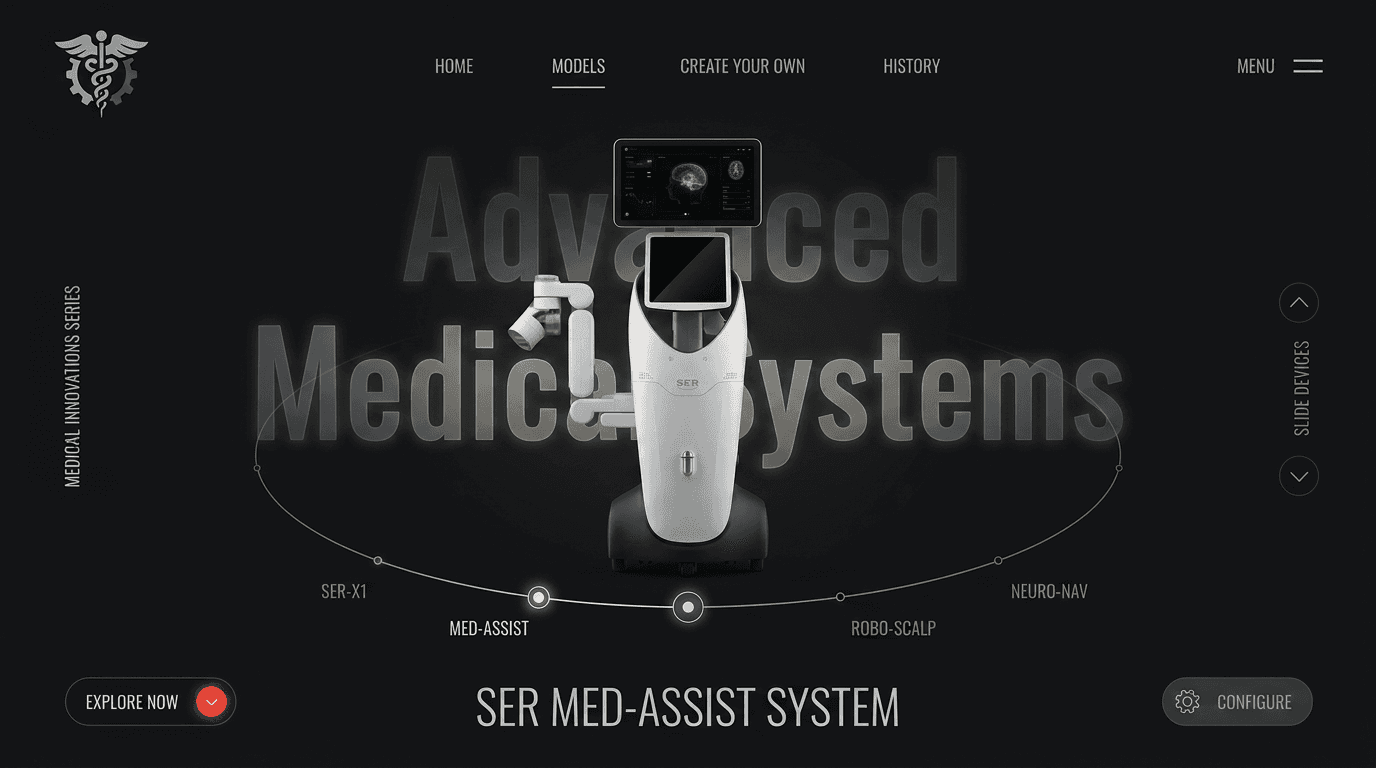
We built a material-first identity and launch site where precision meets weight.
Duration
3 weeks
Industry
Healthcare
Client
Lumesci
Year
2025
Client
VistaHaven
Industry
Real Estate
Project Duration
2 weeks
Intro
To create a high-end yet easy-to-edit website template that helps real estate professionals present listings effectively, drive inquiries, and reinforce trust through modern visual design.
Objective
Many existing real estate templates are cluttered or outdated, lacking mobile optimization and visual appeal. VistaHaven needed to stand out with refined typography, smooth layout structure, and features like dynamic content, image galleries, and contact integrations—all while remaining easy to customize.
Challenge
Many existing real estate templates are cluttered or outdated, lacking mobile optimization and visual appeal. VistaHaven needed to stand out with refined typography, smooth layout structure, and features like dynamic content, image galleries, and contact integrations—all while remaining easy to customize.
Result
Many existing real estate templates are cluttered or outdated, lacking mobile optimization and visual appeal. VistaHaven needed to stand out with refined typography, smooth layout structure, and features like dynamic content, image galleries, and contact integrations—all while remaining easy to customize.
Latest Projects
Year
2024
Client
LumeSci
Industry
Healthcare
Project Duration
3 weeks
Intro
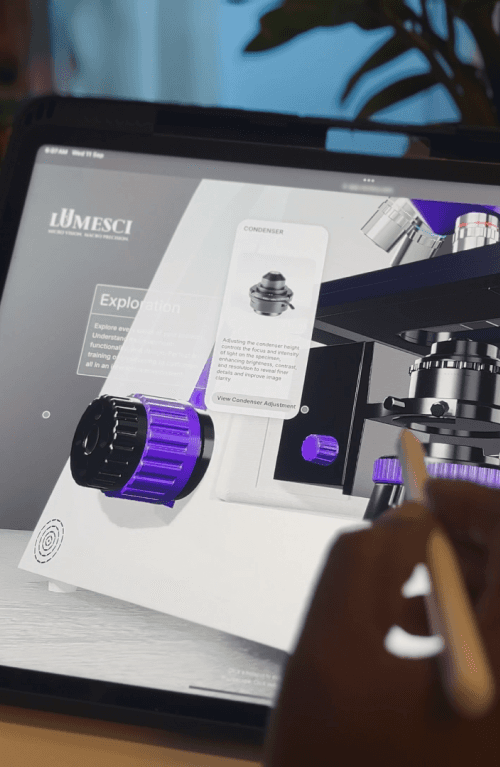
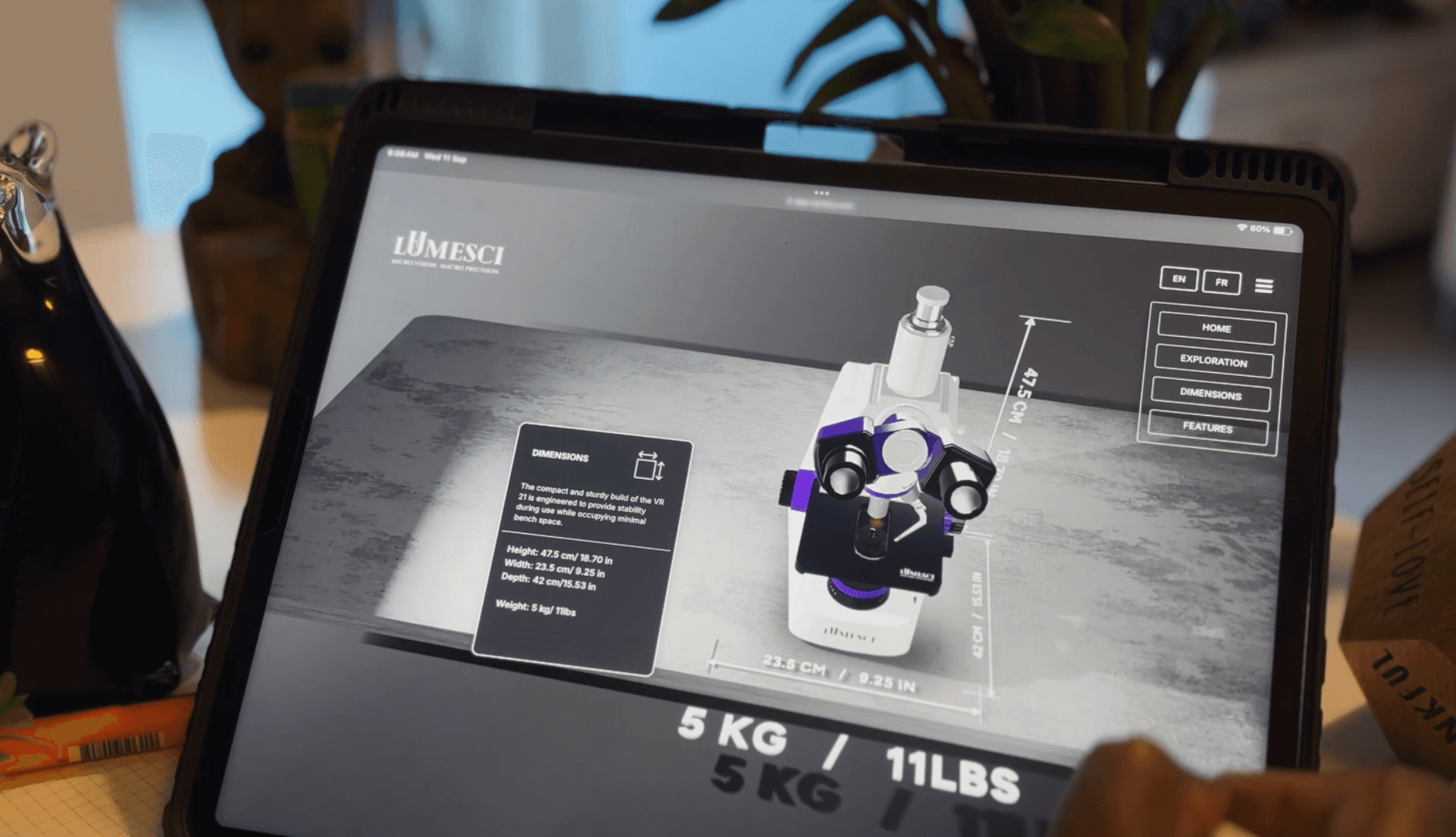
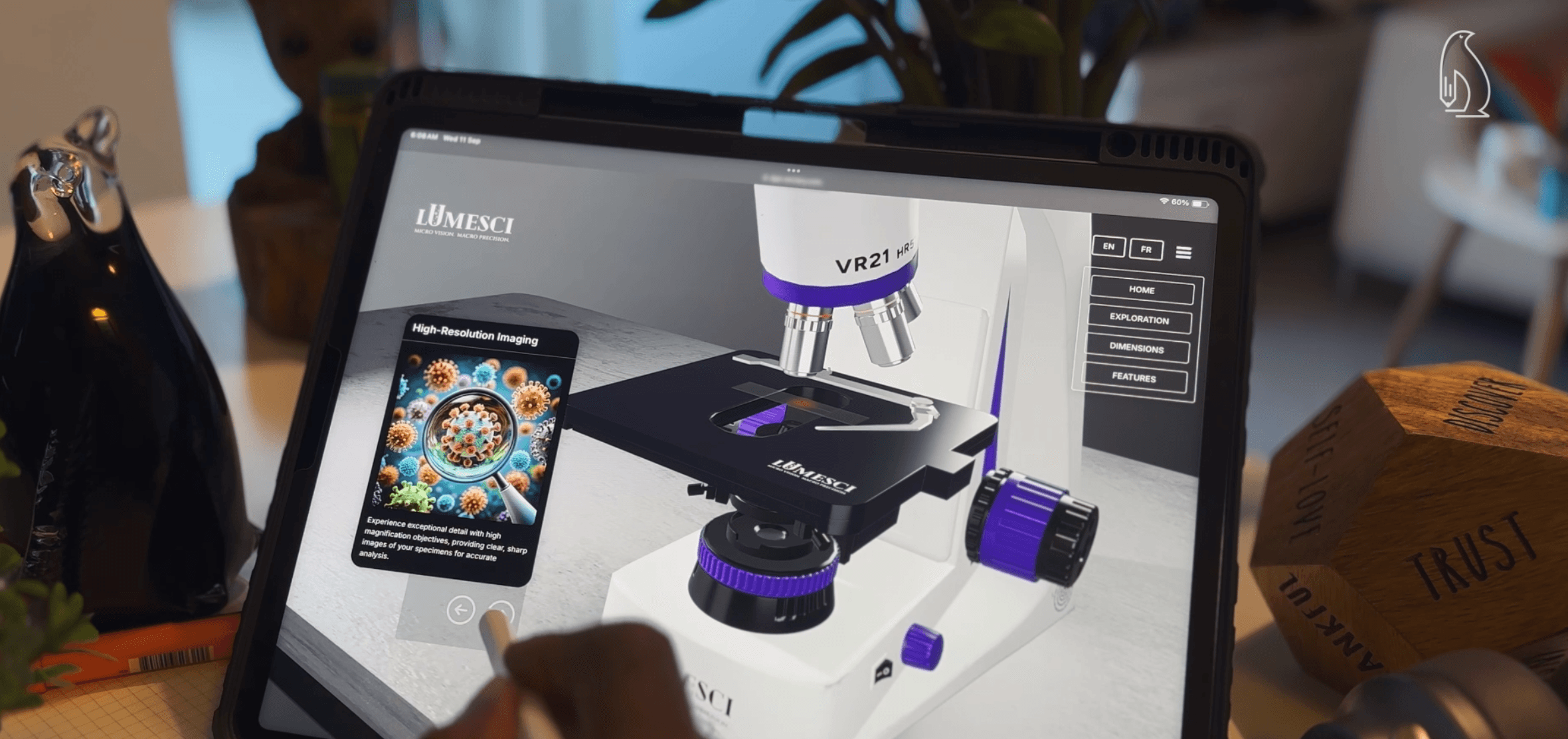
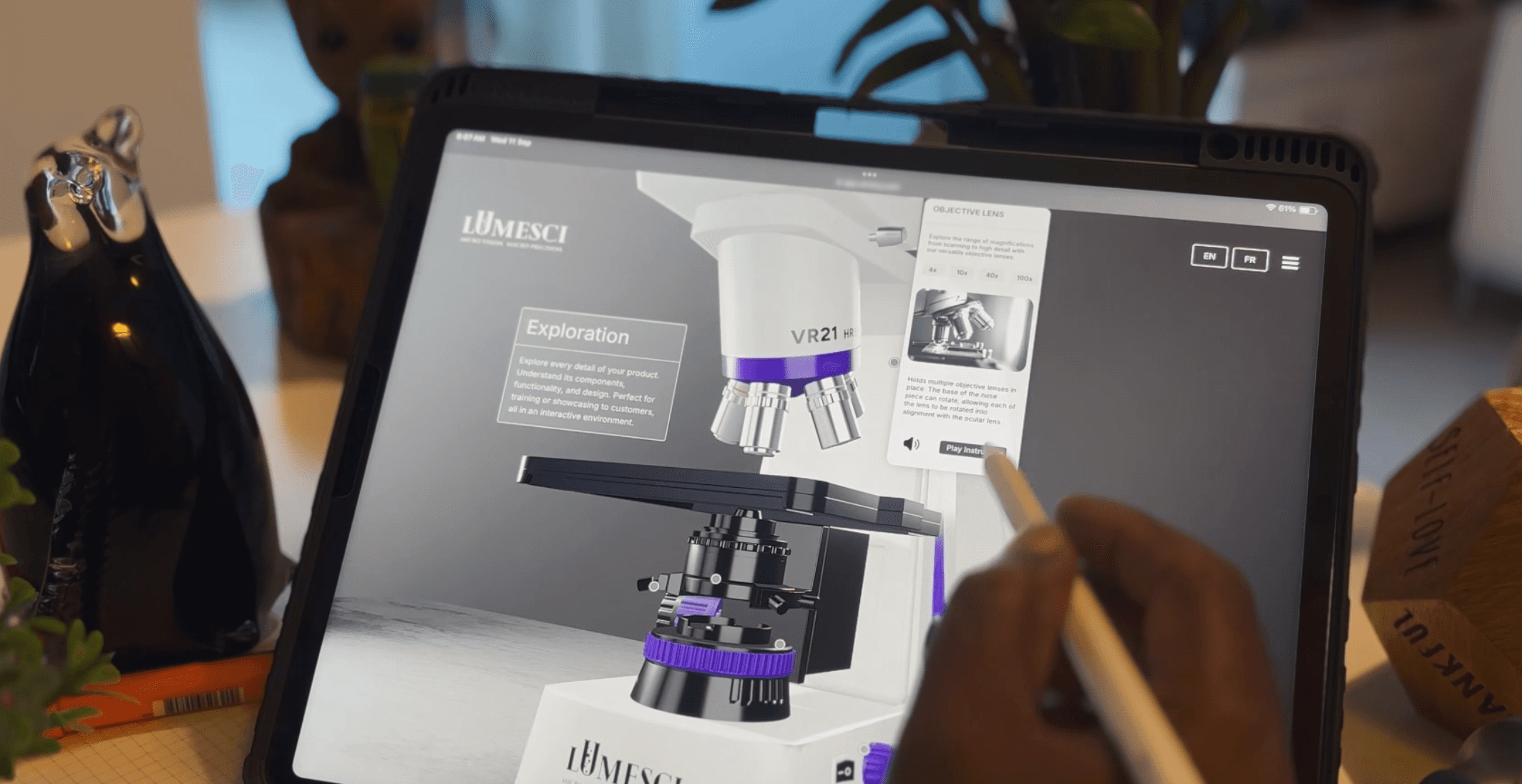
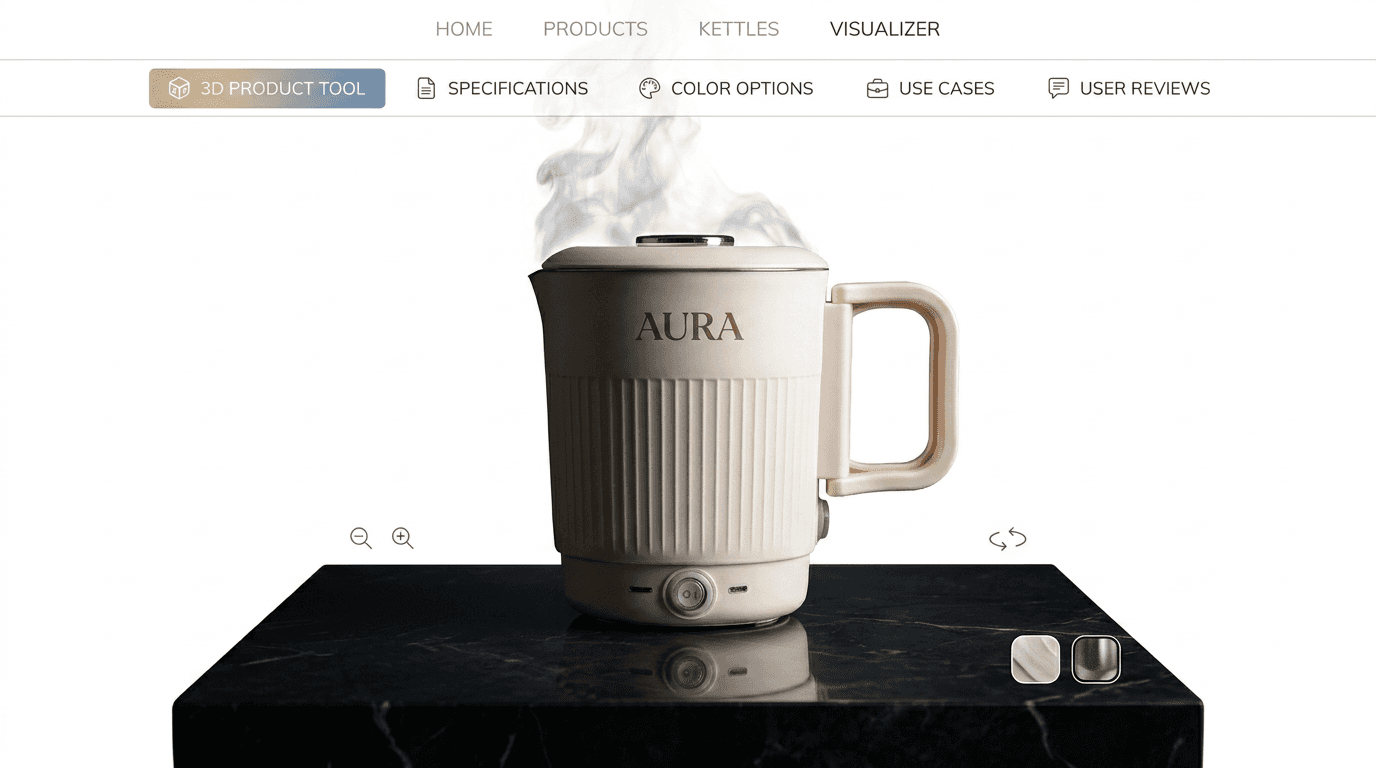
We created an interactive digital twin experience for a high-precision microscope device, enabling users to explore internal optics, mechanical components, and operational workflows in real time. The experience transforms a complex instrument into a clear, engaging, and interactive product journey for both technical and non-technical audiences.
Objective
Microscope systems are highly intricate, making them difficult to present through static visuals or traditional demos. The objective was to build a high-fidelity digital twin that simplifies product understanding, visually communicates internal mechanisms, and supports sales, training, and product education in a single unified platform.
Challenge
The device consists of layered optical systems, precision components, and detailed workflows that require accuracy at every level. The challenge was to present these complexities in an interactive format without overwhelming the user while maintaining performance, responsiveness, and cross-platform compatibility.
Result
The digital twin delivered an immersive, interactive experience that improved product clarity and engagement. Users could explore components, understand workflows, and visualize functionality without physical access to the device. This reduced dependency on live demos, accelerated sales conversations, and created a scalable solution for training and future product iterations.
Latest Projects
Find your answer in seconds.
Digital Twin FAQs
What exactly is a digital twin?
A digital twin is a real-time virtual replica of a physical asset, system, or process. It continuously mirrors its real-world counterpart using live sensor data, enabling simulation, monitoring, and predictive analytics without touching the physical system itself.
How is a digital twin different from a simulation?
Traditional simulations run once based on static inputs. A digital twin is always-on, continuously updated with live data from IoT sensors, and creates a two-way feedback loop — insights from the twin can be pushed back to control the physical asset in real time.
What industries use digital twins?
Digital twins power manufacturing, smart cities, aerospace, healthcare, energy grids, supply chains, and more. Anywhere complex physical systems need continuous optimization — digital twins deliver measurable efficiency gains and reduced downtime.
What data does a digital twin rely on?
Digital twins ingest data from IoT sensors, SCADA systems, historical records, CAD models, and operational logs. The richer and more real-time the data stream, the more accurate the twin's predictive and diagnostic capabilities become.
Can digital twins predict equipment failure?
Yes — predictive maintenance is one of the highest-value use cases. By modelling degradation patterns against live sensor readings, a digital twin can forecast failures days or weeks in advance, dramatically cutting unplanned downtime and maintenance costs.
Find your answer in seconds.
Digital Twin FAQs
What exactly is a digital twin?
A digital twin is a real-time virtual replica of a physical asset, system, or process. It continuously mirrors its real-world counterpart using live sensor data, enabling simulation, monitoring, and predictive analytics without touching the physical system itself.
How is a digital twin different from a simulation?
Traditional simulations run once based on static inputs. A digital twin is always-on, continuously updated with live data from IoT sensors, and creates a two-way feedback loop — insights from the twin can be pushed back to control the physical asset in real time.
What industries use digital twins?
Digital twins power manufacturing, smart cities, aerospace, healthcare, energy grids, supply chains, and more. Anywhere complex physical systems need continuous optimization — digital twins deliver measurable efficiency gains and reduced downtime.
What data does a digital twin rely on?
Digital twins ingest data from IoT sensors, SCADA systems, historical records, CAD models, and operational logs. The richer and more real-time the data stream, the more accurate the twin's predictive and diagnostic capabilities become.
Can digital twins predict equipment failure?
Yes — predictive maintenance is one of the highest-value use cases. By modelling degradation patterns against live sensor readings, a digital twin can forecast failures days or weeks in advance, dramatically cutting unplanned downtime and maintenance costs.
Find your answer in seconds.
Digital Twin FAQs
What exactly is a digital twin?
A digital twin is a real-time virtual replica of a physical asset, system, or process. It continuously mirrors its real-world counterpart using live sensor data, enabling simulation, monitoring, and predictive analytics without touching the physical system itself.
How is a digital twin different from a simulation?
Traditional simulations run once based on static inputs. A digital twin is always-on, continuously updated with live data from IoT sensors, and creates a two-way feedback loop — insights from the twin can be pushed back to control the physical asset in real time.
What industries use digital twins?
Digital twins power manufacturing, smart cities, aerospace, healthcare, energy grids, supply chains, and more. Anywhere complex physical systems need continuous optimization — digital twins deliver measurable efficiency gains and reduced downtime.
What data does a digital twin rely on?
Digital twins ingest data from IoT sensors, SCADA systems, historical records, CAD models, and operational logs. The richer and more real-time the data stream, the more accurate the twin's predictive and diagnostic capabilities become.
Can digital twins predict equipment failure?
Yes — predictive maintenance is one of the highest-value use cases. By modelling degradation patterns against live sensor readings, a digital twin can forecast failures days or weeks in advance, dramatically cutting unplanned downtime and maintenance costs.