Digital twin technology is one of the most discussed concepts in industrial manufacturing. But what does it actually mean, how are OEMs using it today, and what is the difference between a digital twin and a product experience?
Introduction
The term digital twin has become one of the most widely used — and widely misunderstood — concepts in industrial technology. It appears in manufacturing trade press, investor presentations, and product marketing with enough frequency that its meaning has become diluted. Some vendors use it to describe sophisticated real-time simulation systems connected to live operational data. Others use it to describe a 3D model on a screen.
Understanding what a digital twin actually is, what industrial OEMs are genuinely using it for today, and where the technology is heading is valuable for any organisation evaluating how to apply it to their own operations. This guide cuts through the noise and gives a clear, practical picture of digital twin technology in industrial manufacturing.
What is a Digital Twin?
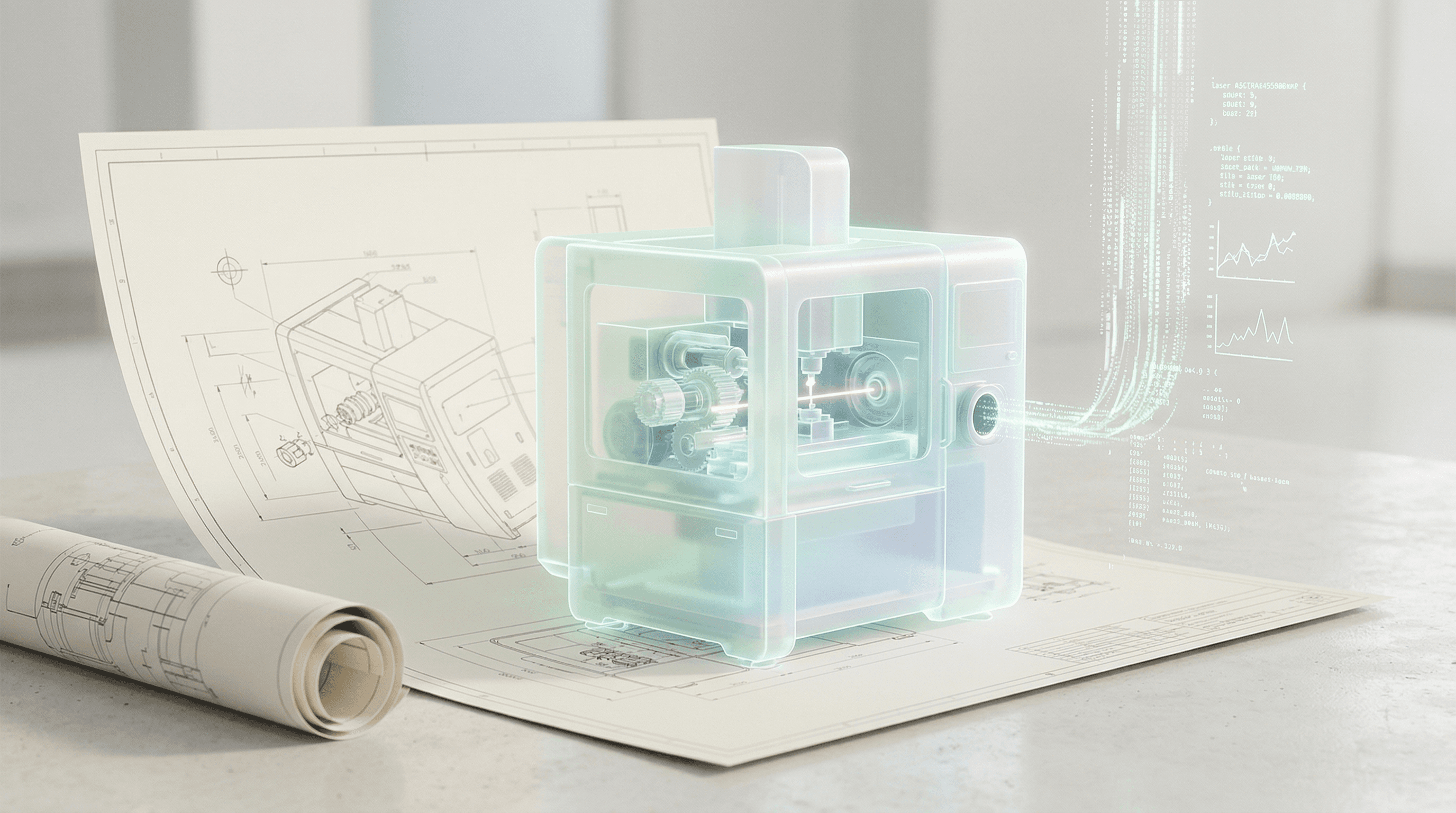
A digital twin is a virtual representation of a physical object, system, or process that is connected to real-world data and updated in real time or near real time to reflect the current state of its physical counterpart.
The key word in that definition is connected. A 3D model of a machine is not a digital twin. A CAD file is not a digital twin. A digital twin is a living virtual replica that receives data from sensors, operational systems, or other data sources and uses that data to mirror, simulate, or predict the behaviour of the physical asset it represents.
This distinction matters because the term is frequently applied to tools and technologies that do not meet this definition — creating confusion for organisations trying to understand what they are actually buying or building.
The Three Levels of Digital Twin Maturity
Not all digital twins are created equal. In practice, digital twin implementations exist on a spectrum of maturity and complexity.
At the most basic level is the descriptive digital twin — a detailed virtual model that accurately represents the geometry, components, and structure of a physical asset. This provides a visual reference but does not receive live data or simulate behaviour dynamically.
At the intermediate level is the informative digital twin — a virtual model connected to historical or near-real-time operational data. This allows engineers and operators to monitor asset performance, track usage patterns, and identify maintenance requirements without being physically present.
At the most advanced level is the predictive digital twin — a fully connected, simulation-capable virtual model that uses live operational data, physics-based modelling, and machine learning to predict future behaviour, optimise performance, and simulate the impact of changes before they are implemented in the physical world.
Most industrial OEMs today are operating at the first or second level. Fully predictive digital twins remain the domain of large-scale industrial operations with significant data infrastructure.
"A digital twin is not a 3D model. It is a living connection between a physical asset and its virtual representation — and that connection is what makes it valuable."
How Industrial OEMs are Using Digital Twins Today
Product design and engineering validation: Before a physical prototype is built, a digital twin allows engineering teams to simulate how a machine will perform under different operating conditions, identify design weaknesses, and test modifications virtually. This reduces the number of physical prototypes required and accelerates the product development cycle significantly.
Predictive maintenance and service optimisation: By connecting a digital twin to sensor data from installed machines, OEMs can monitor equipment health in real time, identify components showing signs of wear before they fail, and schedule maintenance proactively rather than reactively. This reduces unplanned downtime and lowers the total cost of ownership for end users.
Remote monitoring and diagnostics: Industrial OEMs with globally installed machine fleets can use digital twins to monitor equipment performance across multiple customer sites from a central location — identifying anomalies, diagnosing faults remotely, and dispatching service engineers with the right parts and preparation before arriving on site
Operator training and onboarding: A digital twin of a complex machine provides a safe, cost-effective environment for training operators — allowing them to practice procedures, understand machine behaviour, and develop familiarity with the interface without risk to the physical asset or disruption to production.
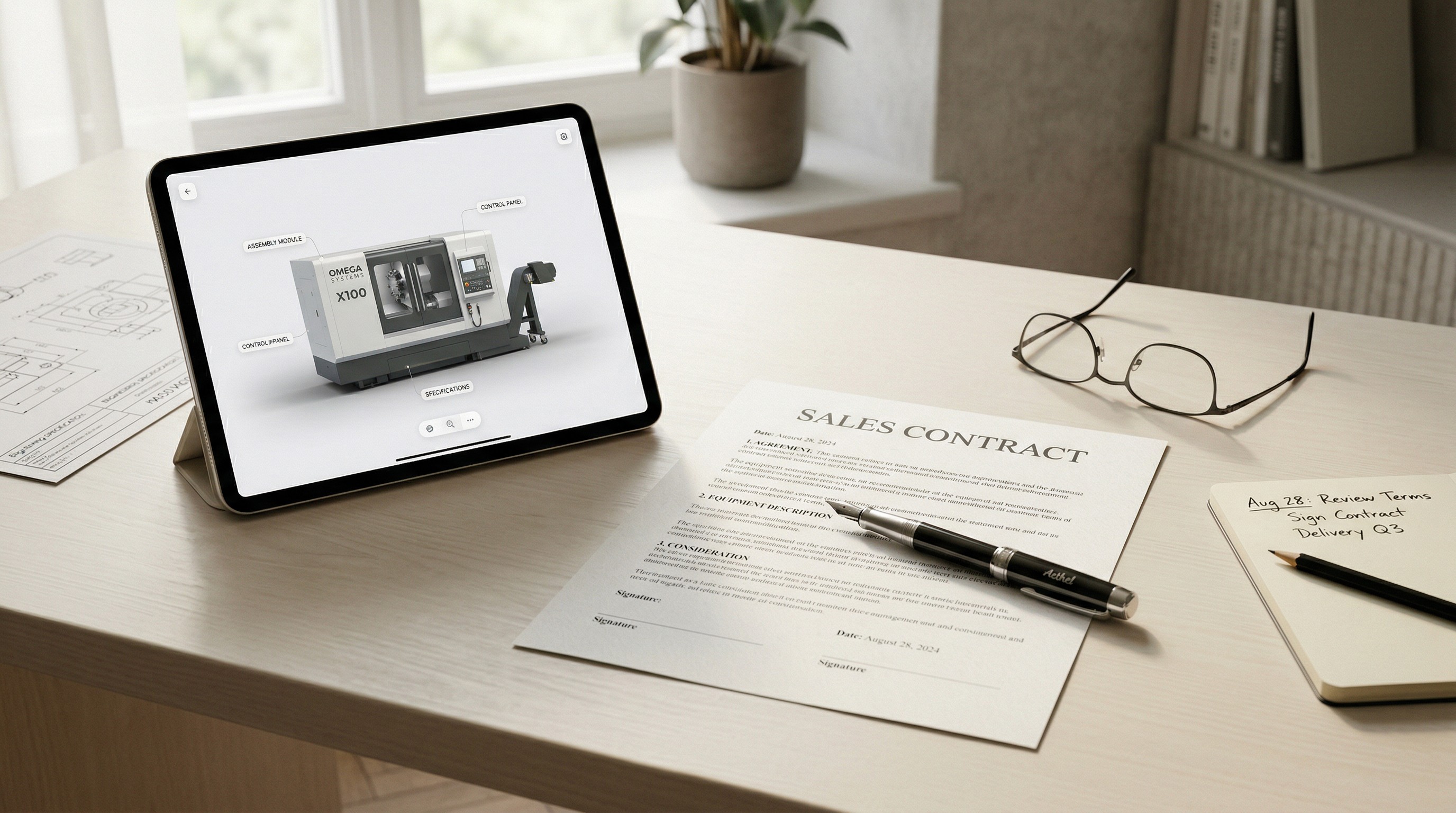
Sales and product demonstration: An accurate virtual representation of a product — even without live data connectivity — allows OEM sales teams to demonstrate machine capabilities, show operational workflows, and communicate technical specifications to buyers without requiring the physical machine to be present. This application sits at the descriptive end of the digital twin spectrum but delivers significant commercial value.
Aftermarket and parts support: Digital twins connected to component-level data allow OEM service teams to visually identify faulty parts, understand assembly relationships, and support accurate parts ordering — reducing wrong-part shipments and improving first-time fix rates in the field.
The Difference Between a Digital Twin and a 3D Product Experience
This distinction is worth addressing directly because the two are frequently conflated in OEM technology discussions. A digital twin is defined by its connection to real-world data. Its value comes from the live relationship between the virtual model and the physical asset — the ability to monitor, simulate, and predict based on what is actually happening in the real world.
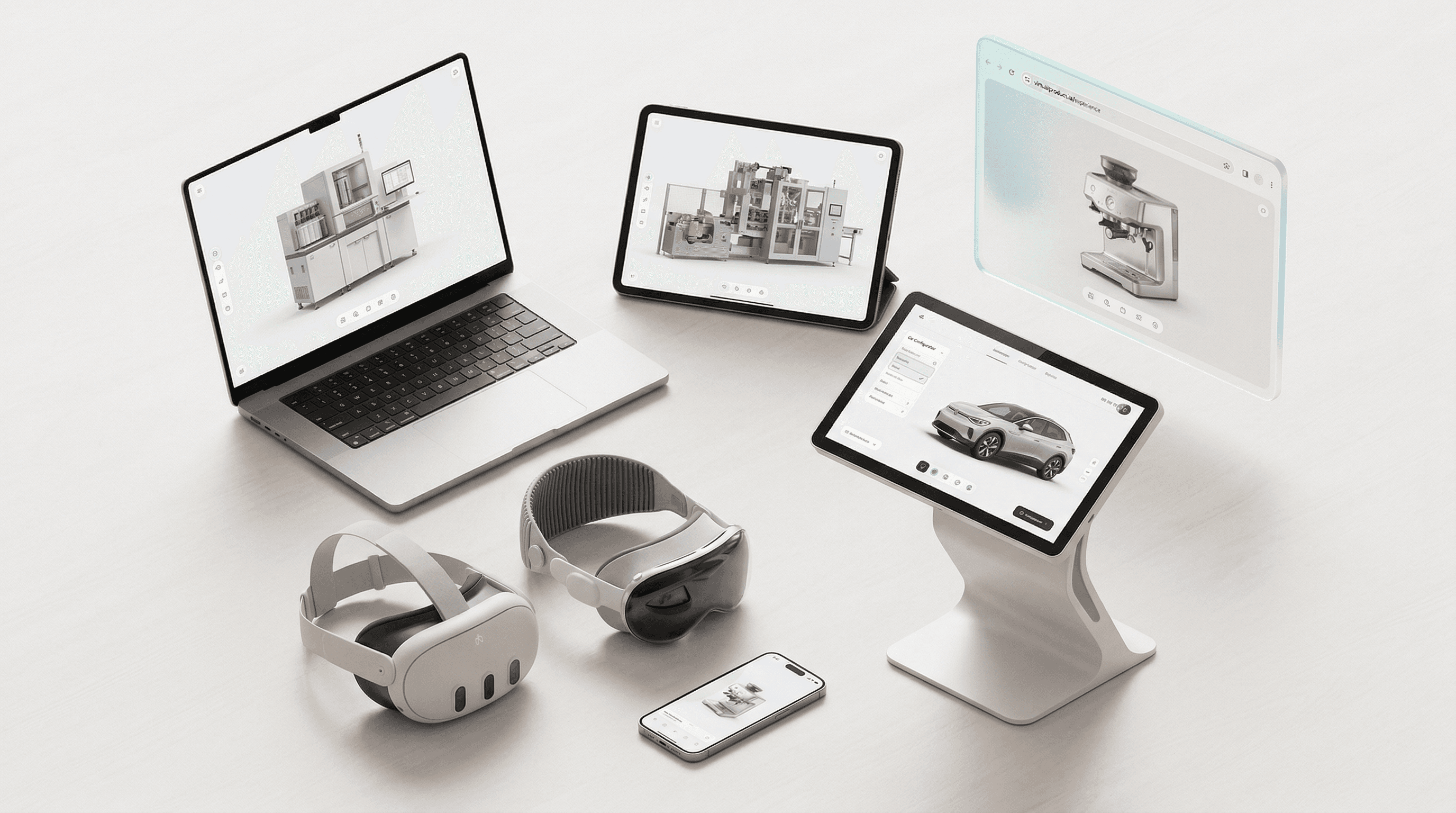
A 3D product experience is a visual, interactive representation of a product designed for communication and demonstration rather than operational monitoring. It does not receive live data. It is not connected to a physical asset. Its value comes from its ability to communicate how a product looks, works, and fits a buyer's environment — clearly, accurately, and accessibly.
Both are valuable. They serve different purposes and operate at different levels of technical complexity. An OEM exploring digital twin technology for predictive maintenance and an OEM building a 3D product experience for sales demonstrations are solving different problems with different tools — and understanding that distinction helps organisations invest in the right technology for their specific needs.
Where Digital Twin Technology Is Heading for Industrial OEMs
The trajectory of digital twin adoption in industrial manufacturing points clearly toward broader deployment and deeper integration. As sensor costs fall, connectivity infrastructure improves, and AI-based simulation tools become more accessible, the predictive digital twin will move from the domain of large-scale industrial operations into the mainstream of mid-market OEM product development and service operations.
For OEM sales and marketing teams, the increasing familiarity of buyers with digital twin concepts creates an opportunity to position interactive product experiences as the accessible entry point into a broader digital product strategy — demonstrating that the organisation is building toward a more connected, data-driven product lifecycle even if full digital twin implementation is still on the roadmap.
Conclusion
Digital twin technology represents one of the most significant long-term shifts in how industrial OEMs design, manufacture, sell, and support complex products. Understanding what it actually means — and distinguishing it from the broader category of 3D visualisation and product experience tools — is essential for any organisation trying to make informed decisions about where to invest.
The OEMs that will benefit most from digital twin technology are not necessarily the ones that move fastest. They are the ones that understand clearly what problem they are solving, choose the right level of implementation for their current maturity, and build toward greater connectivity and intelligence over time.
The physical asset and its virtual representation are converging. For industrial OEMs, the question is not whether to engage with that convergence — it is where to start.
Frequently Asked Questions
What is a digital twin in manufacturing?
A digital twin in manufacturing is a virtual representation of a physical machine, system, or process that is connected to real-world data and updated to reflect the current state of its physical counterpart. It is used for design validation, predictive maintenance, remote monitoring, operator training, and performance optimisation.
How are industrial OEMs using digital twins today?
Industrial OEMs are using digital twins for product design and engineering validation, predictive maintenance, remote diagnostics, operator training, sales demonstrations, and aftermarket parts support. The level of implementation varies significantly — from descriptive virtual models to fully connected predictive simulation systems.
What is the difference between a digital twin and a 3D product experience?
A digital twin is defined by its live connection to real-world operational data — it monitors, simulates, and predicts based on what is actually happening in the physical asset. A 3D product experience is an interactive visual representation designed for communication and demonstration. Both are valuable but serve fundamentally different purposes.