For industrial OEMs, the physical machine demo has long been the gold standard. But there is a faster, smarter, and significantly cheaper way to put your product in front of serious buyers.
Introduction
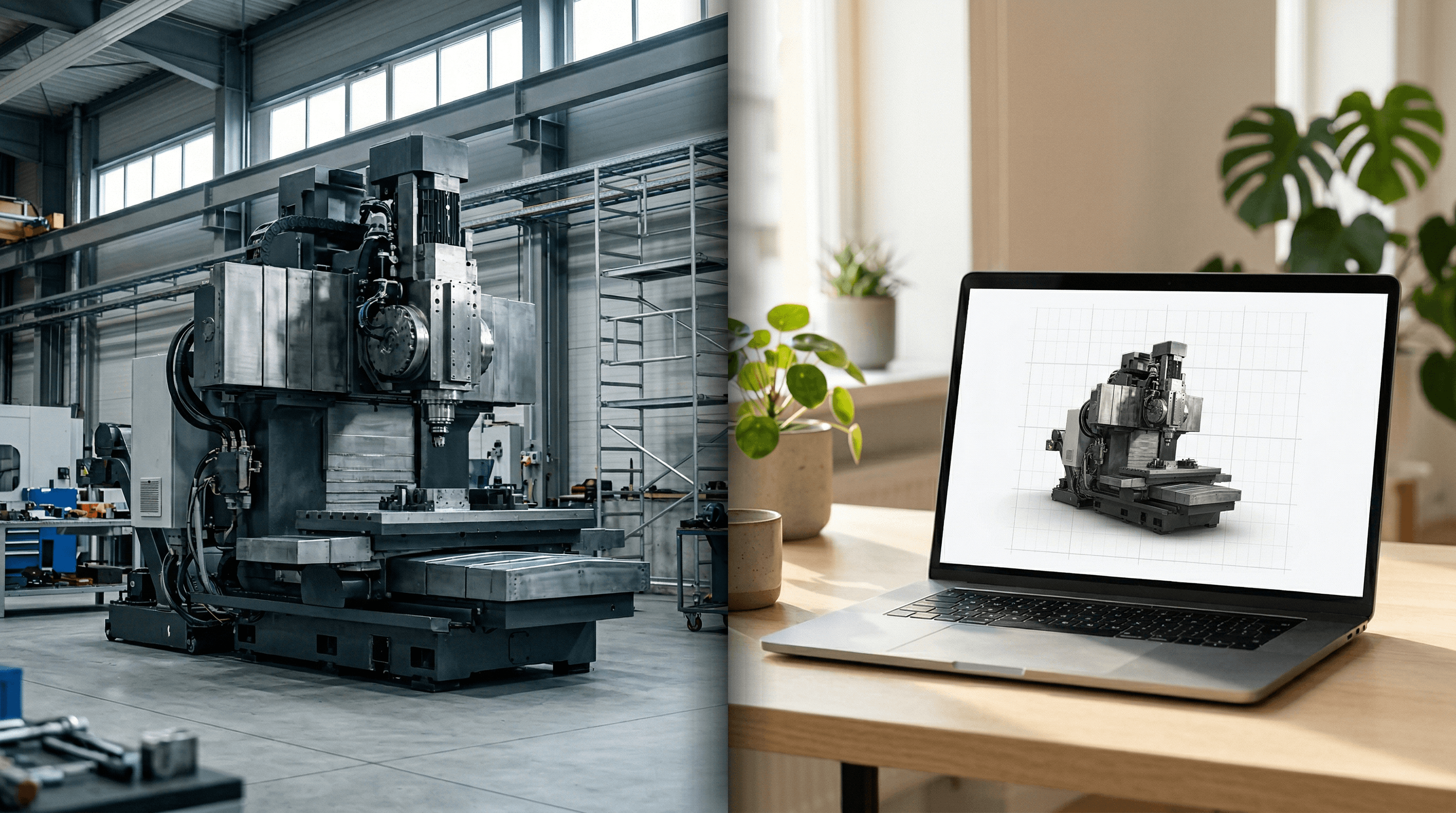
Demonstrating complex industrial equipment has always come with an uncomfortable reality — to show it, you have to move it. Crating, shipping, insuring, and setting up a machine at a customer site or trade show floor is expensive, time-consuming, and logistically demanding. For global OEMs managing multiple sales conversations across multiple geographies simultaneously, it simply does not scale.
The good news is that the tools to demo complex industrial equipment without shipping it now exist. Industrial sales teams no longer need to choose between a physical demo and no demo at all — and the best teams are already making the shift.
Why the Physical Demo Has Been So Hard to Replace
For decades, nothing matched the impact of putting a buyer in front of the actual machine. The scale, the sound, the movement — these created a visceral understanding that no brochure or video could replicate. This is why OEMs continued investing in physical machine demonstrations despite the mounting cost and complexity.
But buyer expectations have shifted significantly. Today's procurement teams research extensively before engaging with sales. They want to understand how a machine works, how it fits their workflow, and how it compares to alternatives — often before they are ready for a site visit. A sales process that depends entirely on physical access is already losing ground before the first conversation begins.
"The physical demo will always have a place. But relying on it as your only tool means every deal depends on logistics — not sales skill."
What Industrial Equipment Demos Actually Need to Communicate
How the machine operates: Buyers need to see the product in motion — loading sequences, operational cycles, component interactions. Static images cannot convey this, and it is one of the core reasons physical industrial equipment demonstrations have been so hard to replace.
How it fits their environment: Dimensions, footprint, and spatial requirements are critical for capital equipment buyers evaluating installation feasibility. An OEM product demo that cannot communicate scale is an incomplete one.
How the interface works: Modern industrial machines run complex software. Buyers evaluating a machine are also evaluating its HMI and operational workflow — and this is rarely communicated effectively in a video or brochure.
How it compares across configurations: Many OEM products ship in multiple variants. Buyers need to understand which configuration fits their specific use case — something a single physical machine setup cannot always demonstrate.
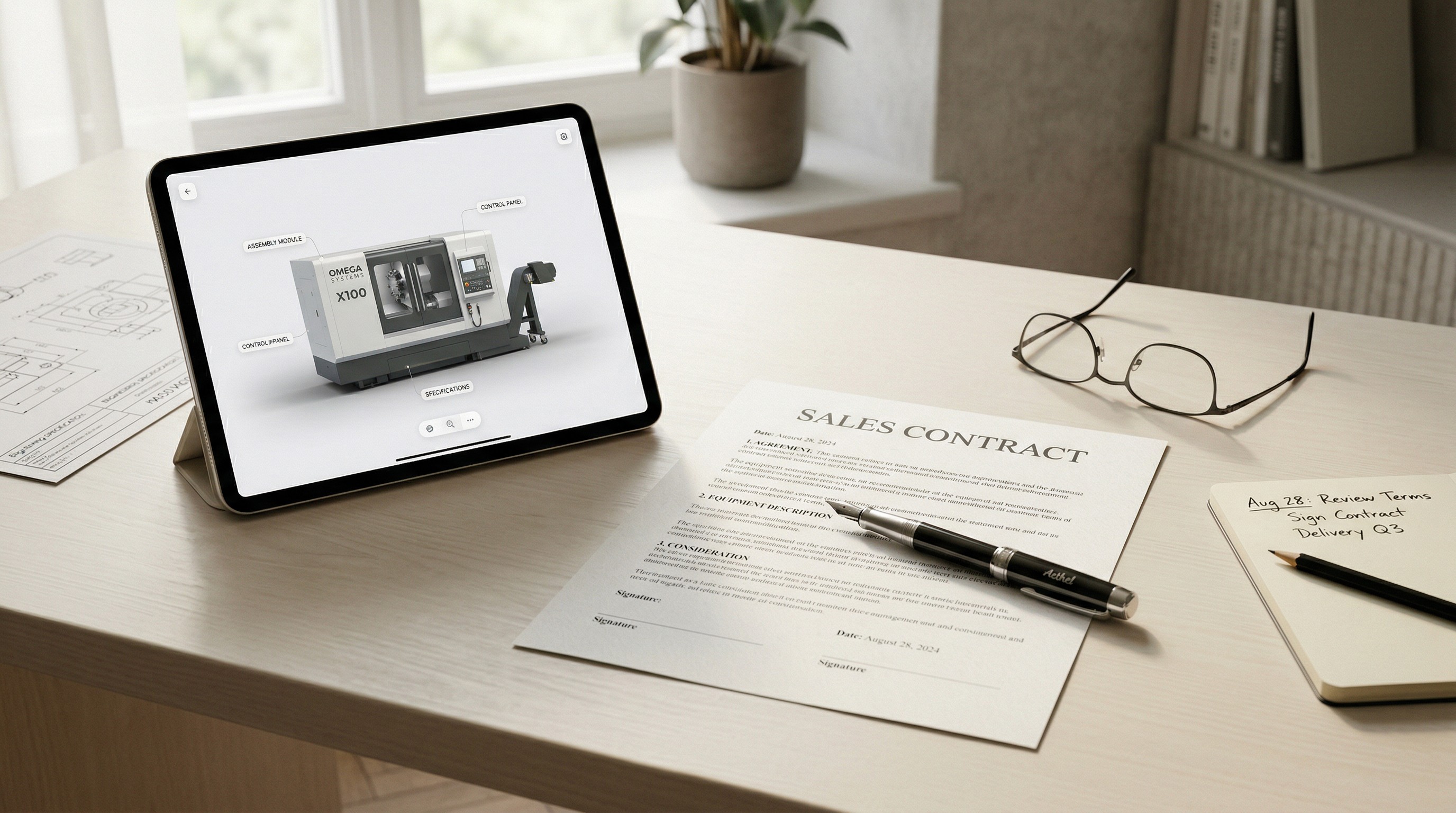
What happens after the meeting: Buyers rarely make decisions alone. They need to share what they saw with colleagues, managers, and procurement teams who were not in the room. A demo that only exists in a physical location cannot travel with them.
What a Modern Industrial Equipment Demo Looks Like
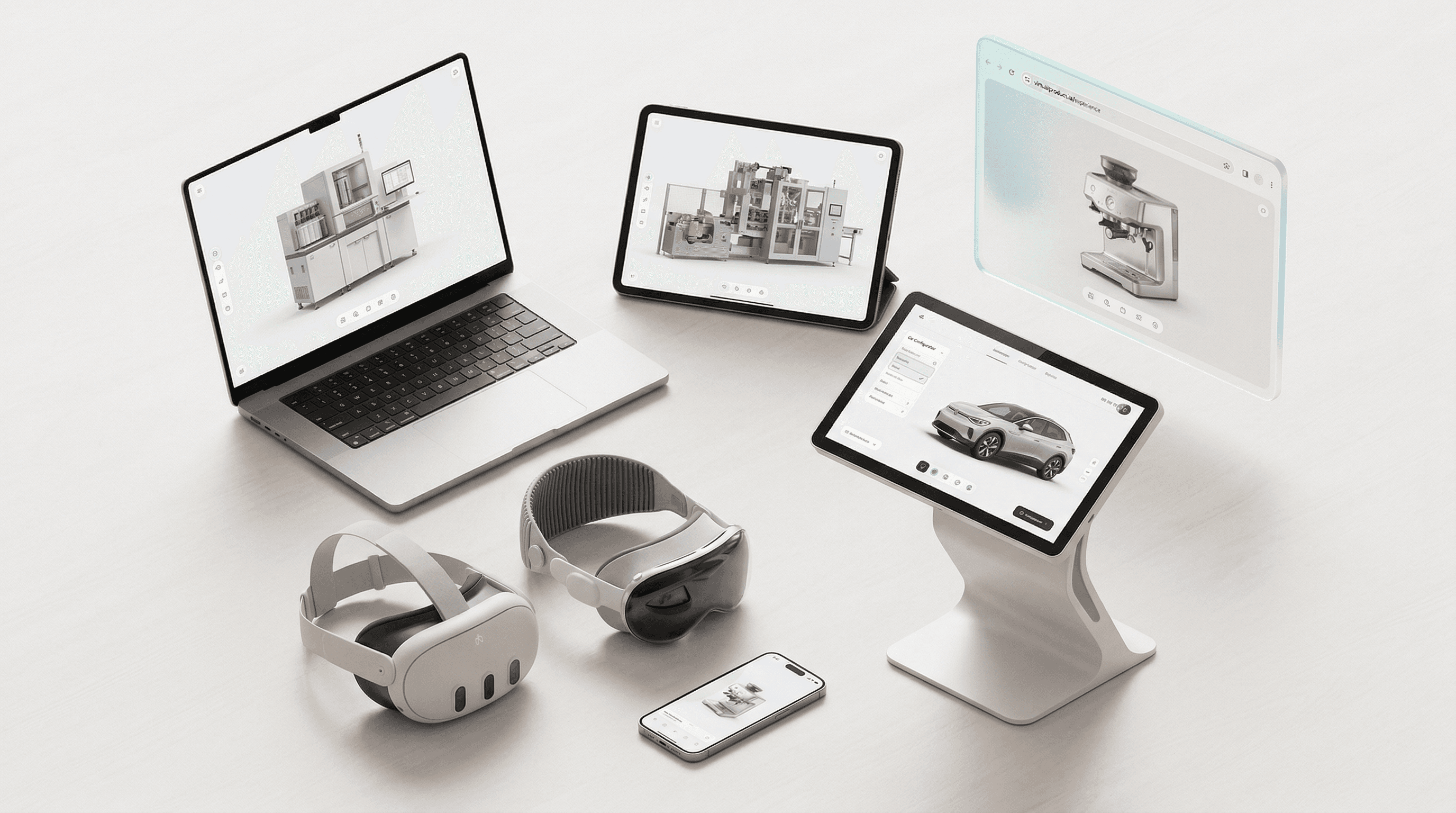
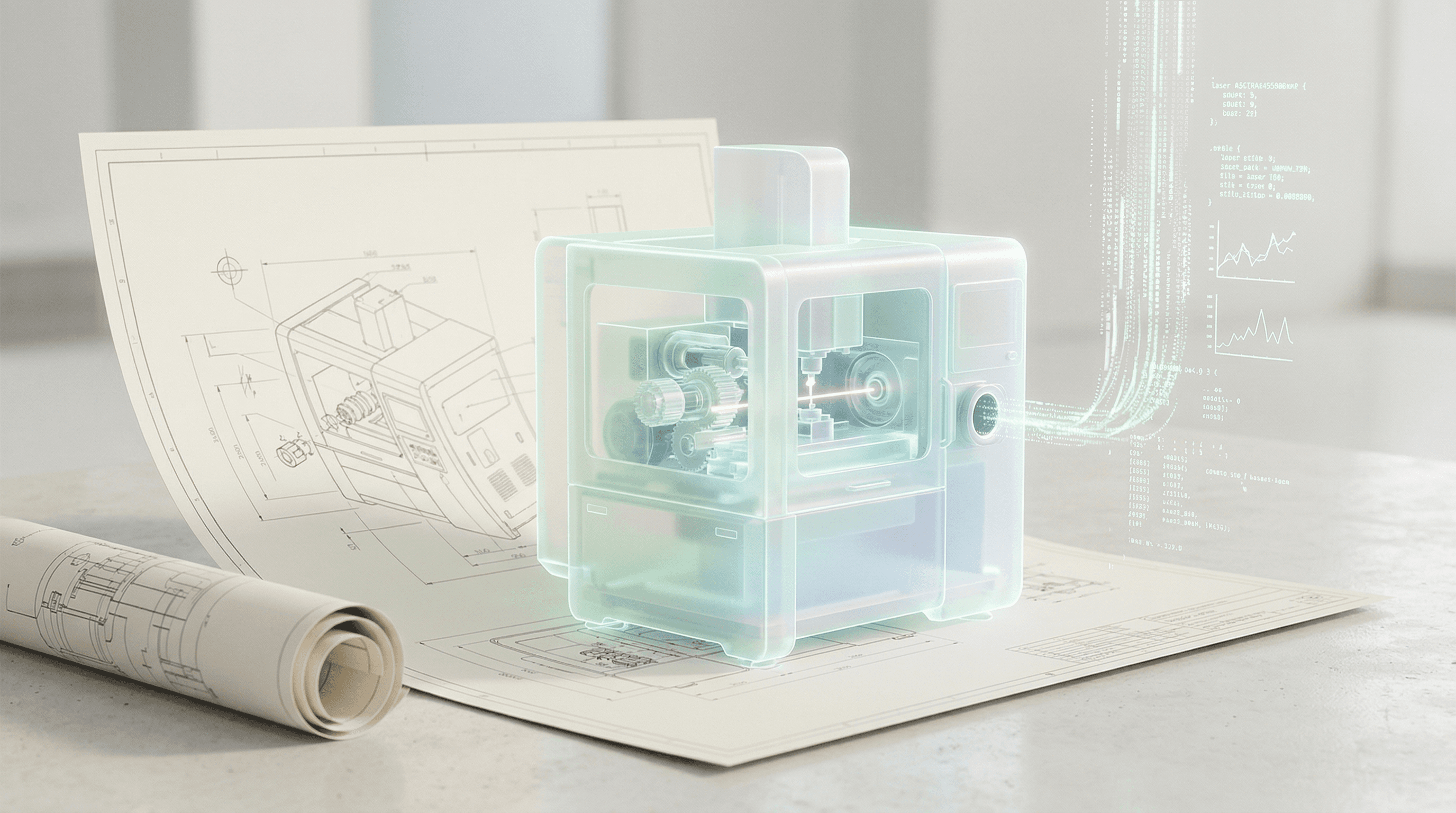
An interactive 3D product experience addresses each of these requirements directly. Built using 3D assets, it allows sales teams to guide buyers through animated operational workflows, highlight key features, simulate the machine interface, and display accurate dimensions — on any device, anywhere in the world.
This kind of industrial sales enablement tool does not require specialist hardware or software on the buyer's side. It can be presented live during a sales meeting, shared as a link for independent exploration afterwards, or embedded directly on a manufacturer's website for buyers researching during their own time.
Critically, the same experience can be shared with a buyer after the meeting. Colleagues and decision makers who were not present can explore the product independently, ask questions, and build confidence — without requiring another site visit or another demo session. For OEMs selling into buying committees of five, ten, or more stakeholders, this reach is transformative.
The same interactive 3D product demo can also be deployed in AR and VR — allowing a buyer to place the product into their own facility using a mobile phone, or walk around it at true scale in a VR headset. All from the same experience, without rebuilding anything from scratch.
Conclusion
The goal of a product demo has never changed — it is to give a buyer enough understanding and confidence to move forward. What has changed is the tools available to achieve that goal. For industrial OEMs, an interactive 3D product experience does not replace the physical machine entirely. It extends the reach of every demo, removes the dependency on logistics, and ensures the product story reaches every stakeholder involved in the decision.
As buyer expectations continue to rise and sales teams operate across wider geographies, the ability to demo complex industrial equipment without shipping it is no longer a competitive advantage — it is becoming a baseline requirement. The OEMs that build this capability now will be better positioned for every sales conversation that follows.
The machine stays in the factory. The demo goes everywhere.
Frequently Asked Questions
How can industrial OEMs demo complex equipment without a physical machine?
Industrial OEMs can use interactive 3D product experiences — built from 3D assets — to demonstrate how their equipment operates, highlight key features, simulate machine interfaces, and display accurate dimensions, all without requiring the physical machine to be present.
What is the best way to demo industrial equipment remotely?
An interactive 3D product demo allows sales teams to present complex industrial equipment remotely in real time, share it with buyers as a link for independent exploration, and deploy it across AR and VR for immersive demonstrations — all from a single experience.
Can interactive 3D demos replace physical machine demonstrations entirely?
Not entirely — physical demos retain value in specific contexts. However, interactive 3D product experiences extend the reach of every demo significantly, ensuring the product story reaches all stakeholders involved in a buying decision regardless of geography or logistics.