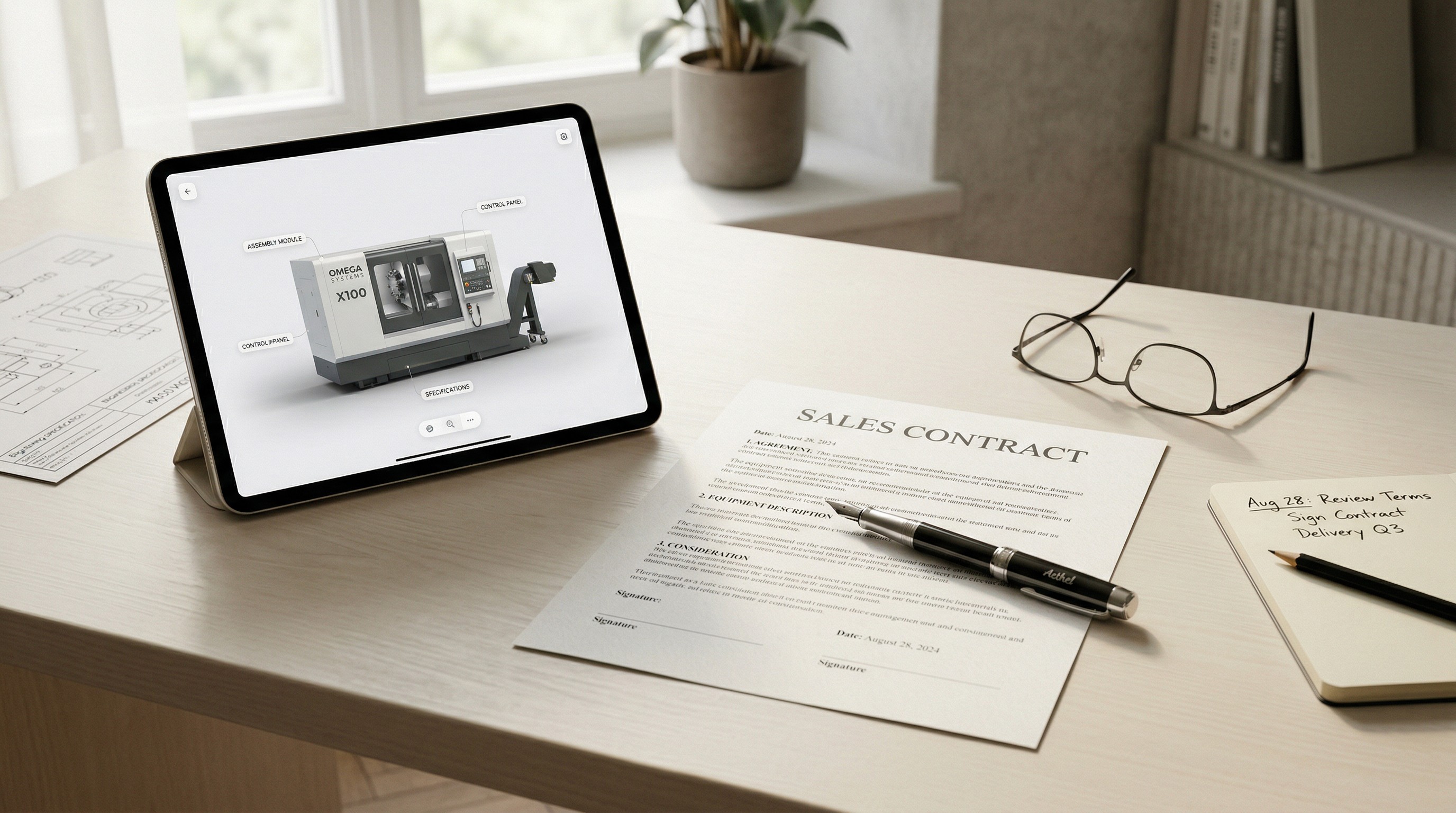
Trade shows have long been the default venue for industrial product demonstrations. But OEMs that rely on them exclusively are missing faster, cheaper, and more measurable ways to put their products in front of serious buyers.
Introduction
For industrial OEMs, the trade show has historically been the centrepiece of the product demonstration calendar. It is where machines are unveiled, relationships are built, and sales conversations are initiated at scale. The value of that environment — the energy, the footfall, the face-to-face access — is real and should not be dismissed.Why Visual Storytelling Works
But the trade show is not the only place where a serious buyer can be reached. And for OEMs that treat it as their primary or sole demonstration strategy, the limitations are significant. High cost, narrow geographic reach, a single annual or biannual window, and almost no post-event visibility into buyer behaviour are structural constraints that no amount of booth investment can fix.
The best industrial OEM sales teams are not abandoning trade shows. They are supplementing them with alternatives that reach buyers faster, cost less to deploy, and generate real intelligence about buyer intent. This guide covers the most effective options available today.
Why Industrial OEMs Need Alternatives to Trade Show Demos
The case for trade show alternatives is not that trade shows are ineffective. It is that they are insufficient on their own. A buyer who could not attend the show still needs to understand the product. A distributor in a new market still needs to present confidently without a physical machine. A procurement committee that was not present at the demo still needs to evaluate what they missed.
Trade show demos reach the people who showed up on those specific days. Trade show alternatives reach everyone else — and in most buying cycles, everyone else includes the majority of the decision makers.
"A trade show gives you four days to reach the buyers who came to you. The right alternatives give you the rest of the year to reach everyone else."
The Best Alternatives to Trade Show Demos for Industrial OEMs
1. Interactive 3D Product Experiences
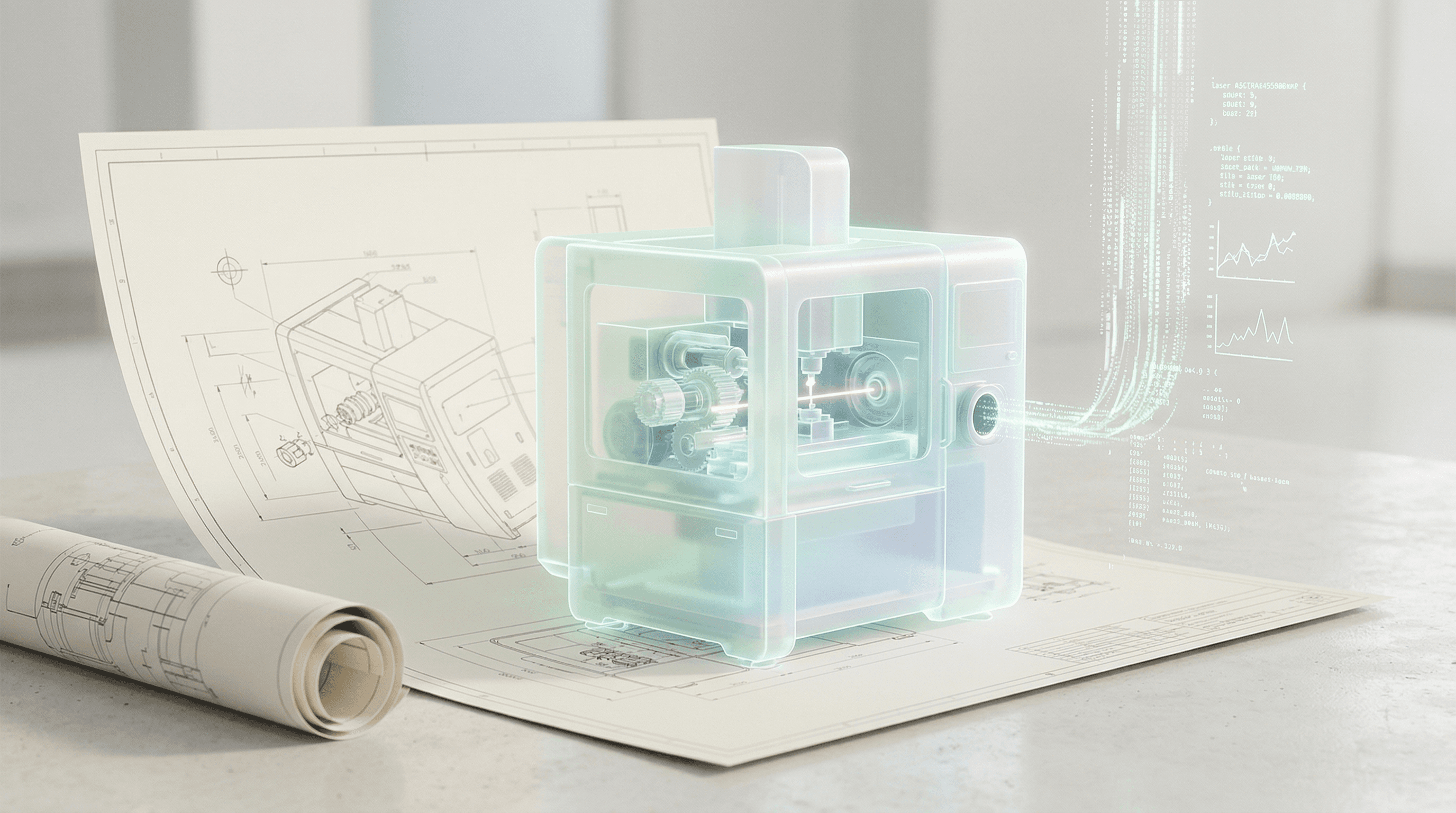
An interactive 3D product experience is the closest digital equivalent to a physical machine demonstration. Built using 3D assets, it allows a buyer to explore a product at their own pace — rotating it, triggering animated operational sequences, inspecting dimensions, and simulating the machine's software interface — on any device, in any location.
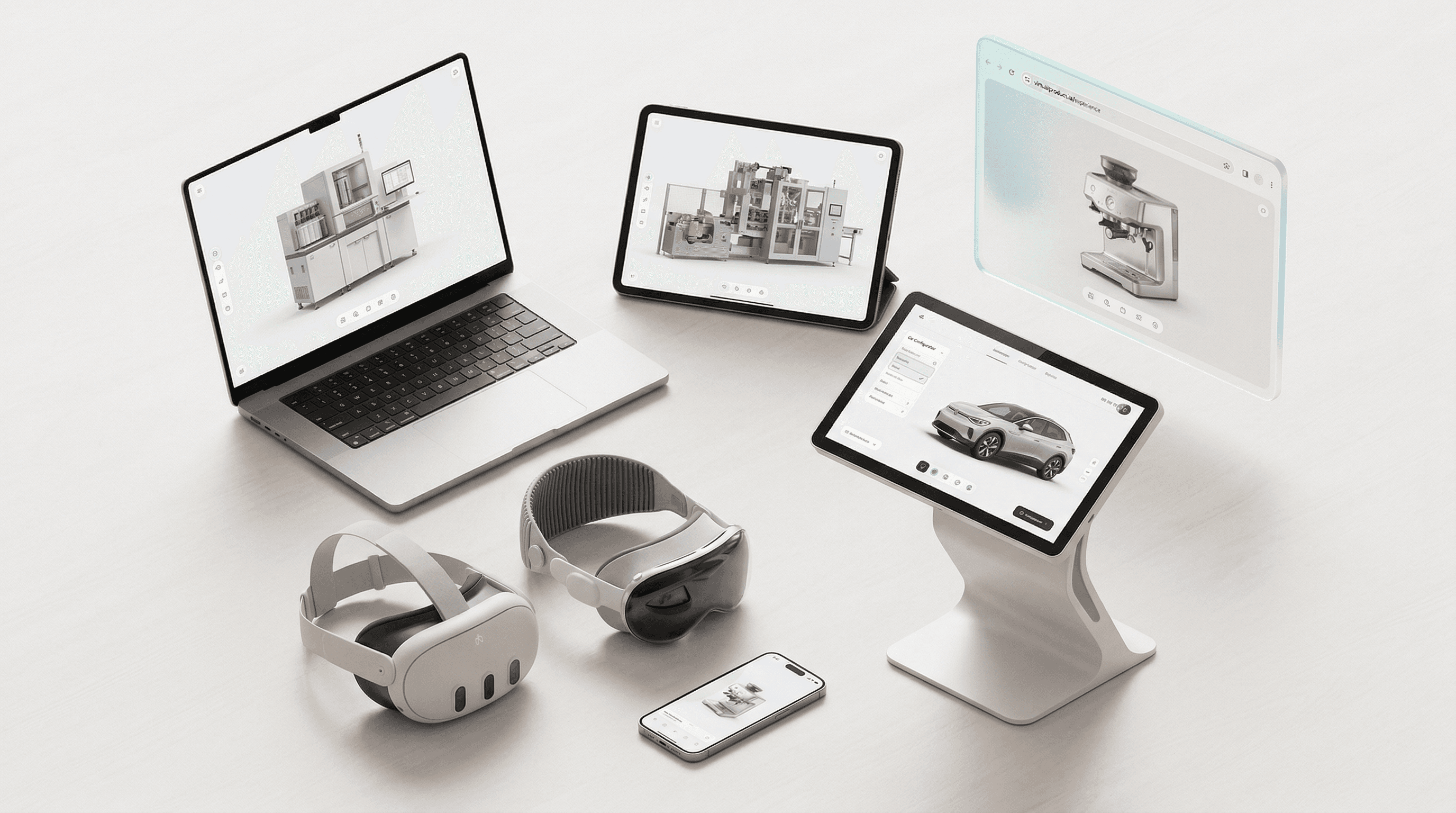
Unlike a pre-recorded video, an interactive 3D experience responds to the viewer. Unlike a physical demo, it can be shared instantly with every stakeholder in a buying committee, deployed across global markets simultaneously, and accessed by a buyer at any point in their evaluation process. The same experience can also be presented live by a salesperson, embedded on a company website, or used at a trade show kiosk — making it one of the most versatile industrial sales tools available.
2. Virtual Reality Product Demonstrations
VR product demonstrations allow buyers to experience a machine at true scale in an immersive environment — walking around it, inspecting components, and watching it operate — without the machine being physically present. For large industrial equipment where scale and spatial presence are central to the buying decision, VR delivers an impact that no flat-screen presentation can match.
Modern VR demonstrations run directly in a headset browser without requiring specialist software installation, making them practical for trade show booths, experience centers, and customer site visits alike. A salesperson can arrive at a customer meeting with a VR headset and deliver an immersive product experience that would otherwise require shipping a machine across the country.
3. Augmented Reality for Spatial Evaluation
Mobile AR allows a buyer to place a virtual representation of a machine into their own facility using a phone or tablet — seeing exactly how it fits their floor space, how it relates to existing equipment, and whether it meets their spatial requirements before committing to a purchase.
For capital equipment buyers where installation feasibility is a significant concern, this capability can accelerate a buying decision meaningfully. A procurement team that can visualize the machine in their own environment before the site survey has already resolved one of the most common sources of late-stage hesitation.
4. Remote Live Demonstrations
A live remote demonstration — where a salesperson presents a physical machine or a digital experience to a buyer via video call — extends the geographic reach of every demo without travel cost or logistical complexity. When combined with an interactive 3D product experience, a remote demo can be as effective as an in-person one for buyers who are already in an active evaluation phase.
The key to effective remote demonstrations is not the video call platform. It is the quality of the visual content being shared. A salesperson presenting a fully interactive 3D experience over a video call gives the buyer something to engage with — not just something to watch.
5. Self-Guided Digital Experiences for Post-Demo Exploration
One of the most underutilized alternatives to trade show demos is the self-guided experience — a shareable link that allows a buyer to explore the product independently after an initial conversation. For buying committees where multiple stakeholders need to evaluate the product, this is particularly valuable. The procurement manager who attended the trade show can share the experience with the clinical director, the operations manager, and the finance lead who did not.
Self-guided experiences also generate buyer engagement data — showing which sections were revisited, how long was spent on specific features, and whether the experience was shared with additional colleagues. This intelligence transforms a passive sharing activity into an active source of sales intelligence.
6. Experience Centers and Permanent Demo Installations
For OEMs with the resources to invest in a permanent demonstration environment, an experience center offers a controlled, premium setting for buyer visits that is more cost-effective over time than repeated trade show participation. Modern experience centers increasingly combine physical machines with interactive digital experiences and AR/VR demonstrations — creating a multi-layered product story that a trade show booth cannot replicate.
How to Choose the Right Trade Show Demo Alternative
The right combination of trade show alternatives depends on the nature of the product, the structure of the buying process, and the geographic reach of the sales operation. For most industrial OEMs, the most practical starting point is an interactive 3D product experience — it covers the widest range of use cases, requires no specialist hardware on the buyer's side, and can be deployed across desktop, mobile, AR, and VR from a single experience. Use real data or authentic UI when possible.
From there, adding VR for high-value customer visits and self-guided sharing for post-demo follow-up addresses the two most significant gaps in a typical industrial OEM demo strategy — immersive in-person impact and scalable post-meeting reach.
Conclusion
Trade shows will remain part of the industrial OEM sales calendar for the foreseeable future — and for good reason. But the OEMs gaining commercial ground are not waiting for the next show to put their product in front of serious buyers. They are building a portfolio of demonstration alternatives that reaches buyers wherever they are, whenever they are ready to evaluate, and generates real intelligence about their intent along the way.
The question is not whether trade show alternatives are worth investing in. It is which ones are right for your product, your buyers, and your sales operation — and how quickly you can make them part of your standard sales toolkit.
Frequently Asked Questions
What are the best alternatives to trade show demos for industrial OEMs?
The most effective alternatives include interactive 3D product experiences, VR product demonstrations, mobile AR for spatial evaluation, remote live demonstrations, self-guided digital experiences for post-demo sharing, and permanent experience centers. The right combination depends on the product complexity, buyer profile, and geographic reach of the sales operation.
Can interactive 3D product experiences replace trade show demos?
Interactive 3D product experiences do not replace trade shows — they extend the reach of every demo beyond the people who attended the show. The same experience used at a trade show kiosk can be shared with buyers who could not attend, deployed across global markets, and used throughout the sales cycle as a self-guided exploration tool.
How do industrial OEMs demonstrate equipment to buyers who cannot attend a trade show?
Industrial OEMs can reach buyers who cannot attend trade shows through interactive 3D product experiences shared via link, remote live demonstrations over video call, mobile AR for spatial evaluation, and VR demonstrations delivered at customer sites — all without requiring the physical machine to be present.